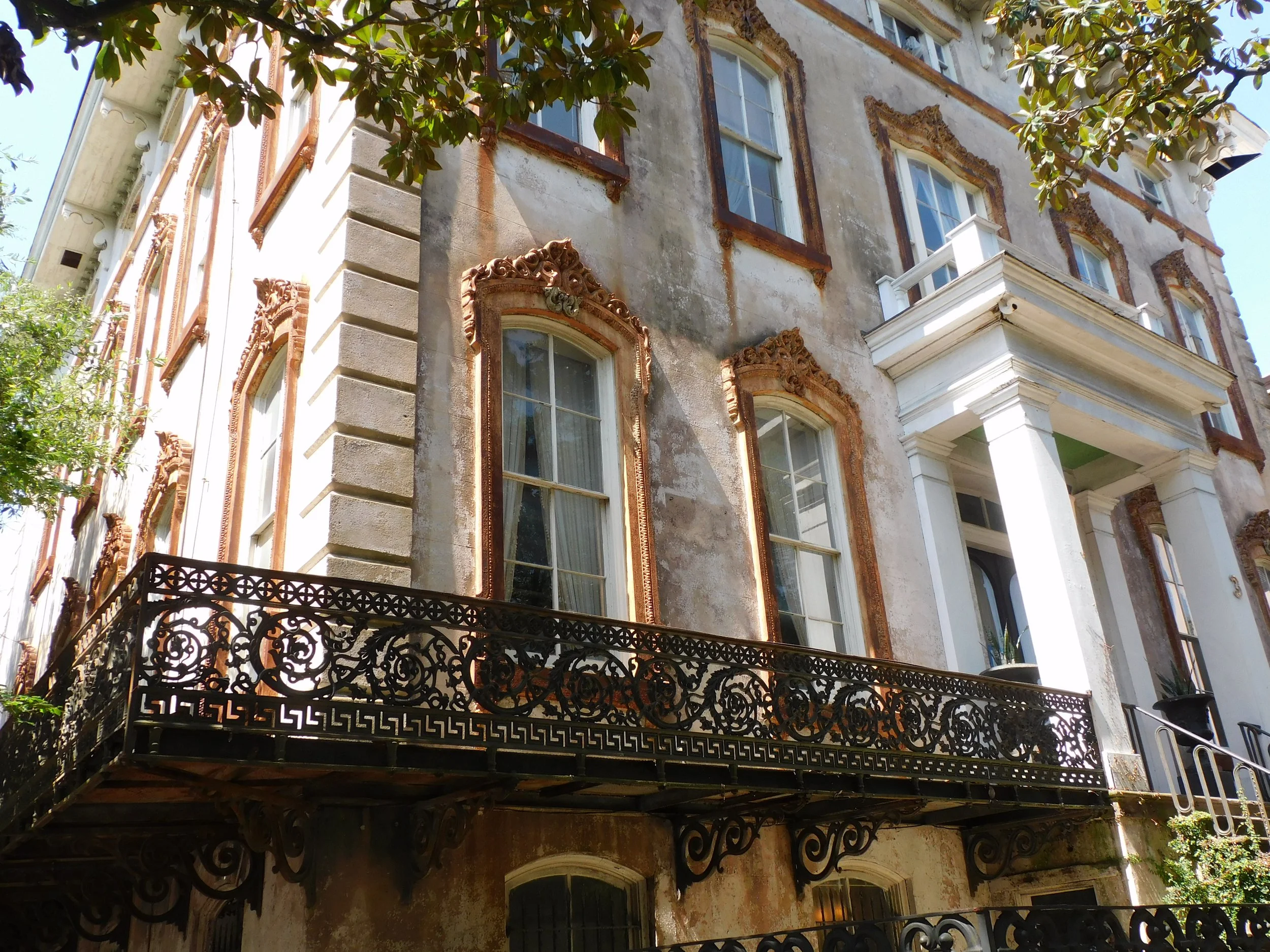
History
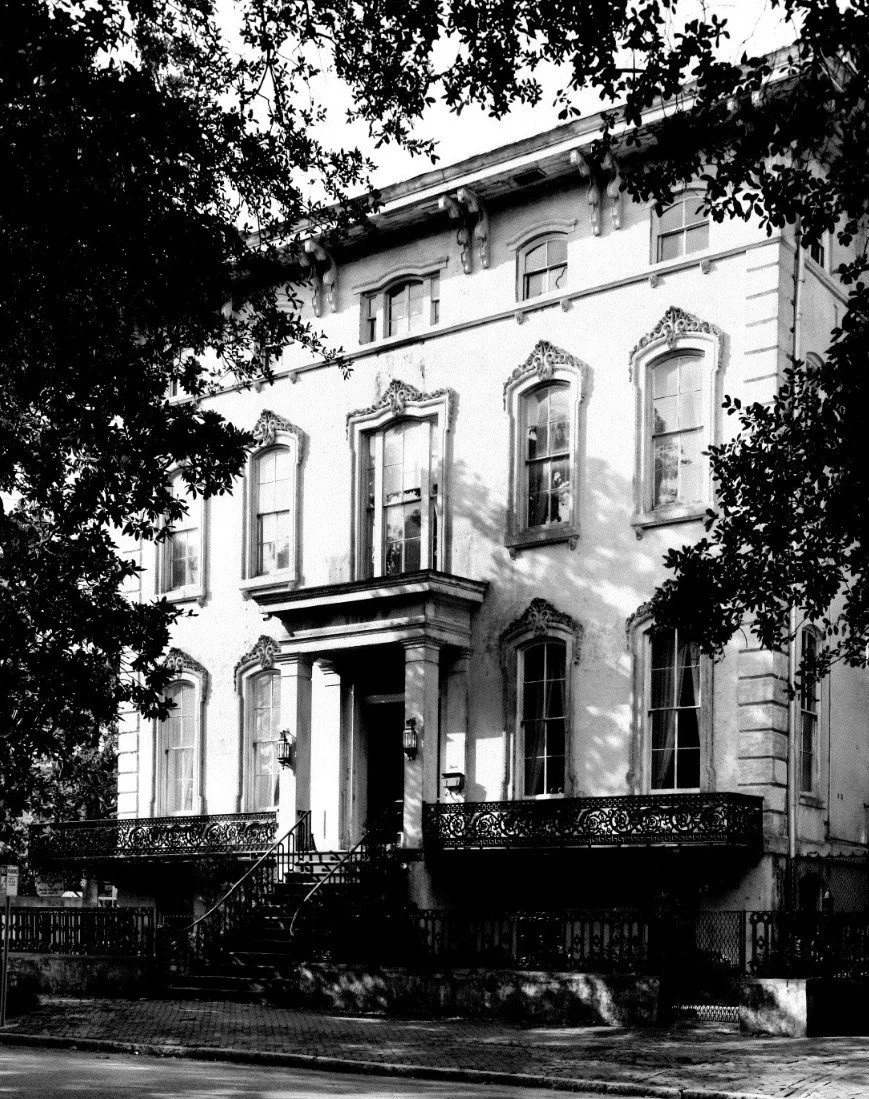
The Italianate-style design, materials, and craftsmanship firmly root the Noble Hardee House in the architectural traditions of 1860s Savannah. And while the design reflects the past, the house has continually evolved, mirroring the city’s shifting identity.
During the ongoing investigation and conservation of the Noble Hardee House, the team will look closely within the building fabric for clues that reveal what the building looked like, how it changed over time, how it was used, and how it adapted over its history.
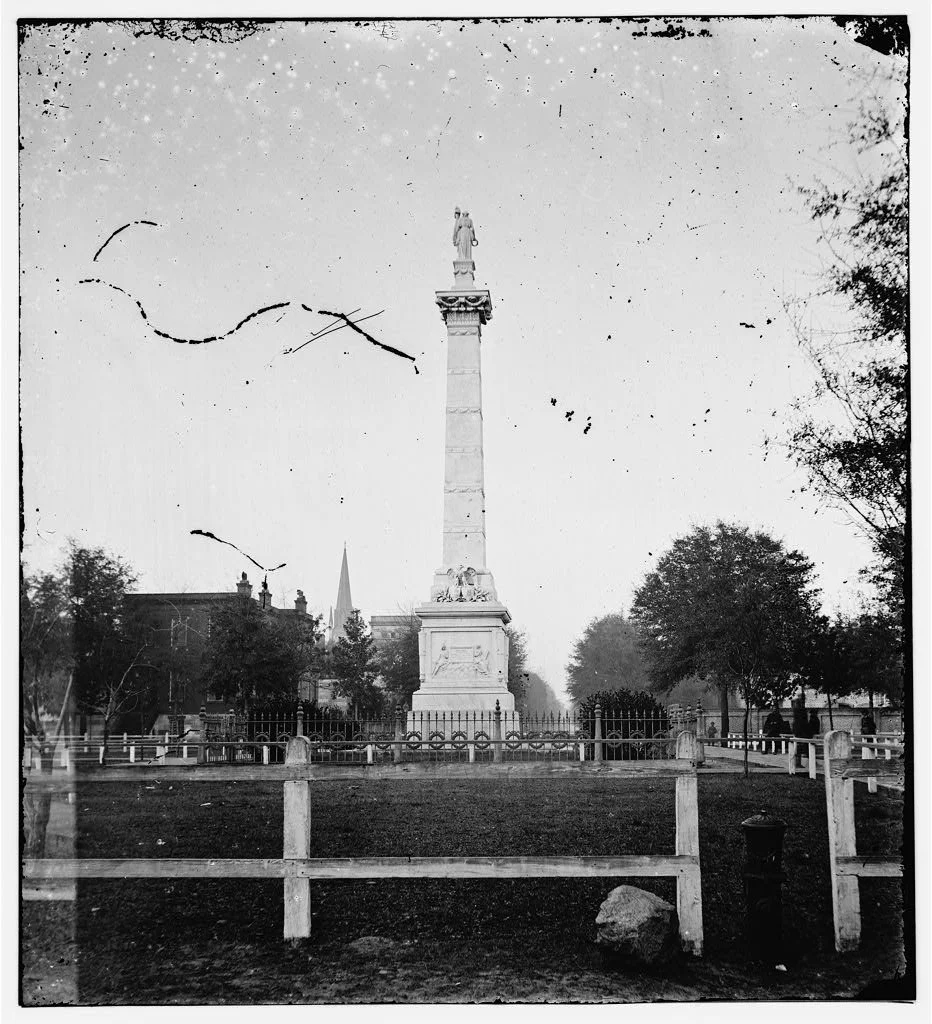
When construction of the house began in 1860, Monterey Square, by then thirteen years old, was already one of Savannah’s most elegant sanctuaries with the Pulaski Monument as its centerpiece. The city’s elite had already built Greek Revival and Italianate houses fronting the square and some of its grandest homes were only just beginning to rise.
These transitions reflect Savannah’s journey from antebellum affluence through post-war adaptation, urban decline, and into modern revitalization. Yet even with these changes, the Noble Hardee House is one of the last buildings from this period where the many layers of history remain intact on both the exterior and interior of the building.

Construction (1860-1869)
Image of Pulaski Monument 1865, Courtesy of Library of Congress1854
Noble A. Hardee had purchased the lot on the corner of Gordon and Bull Streets on Monterey Square in 1854. Like many of his peers, Hardee’s wealth and influence was deeply entwined with the cotton industry. He founded and operated the N.A. Hardee & Company – a cotton factorage, manufacturer, and importer of fertilizer.
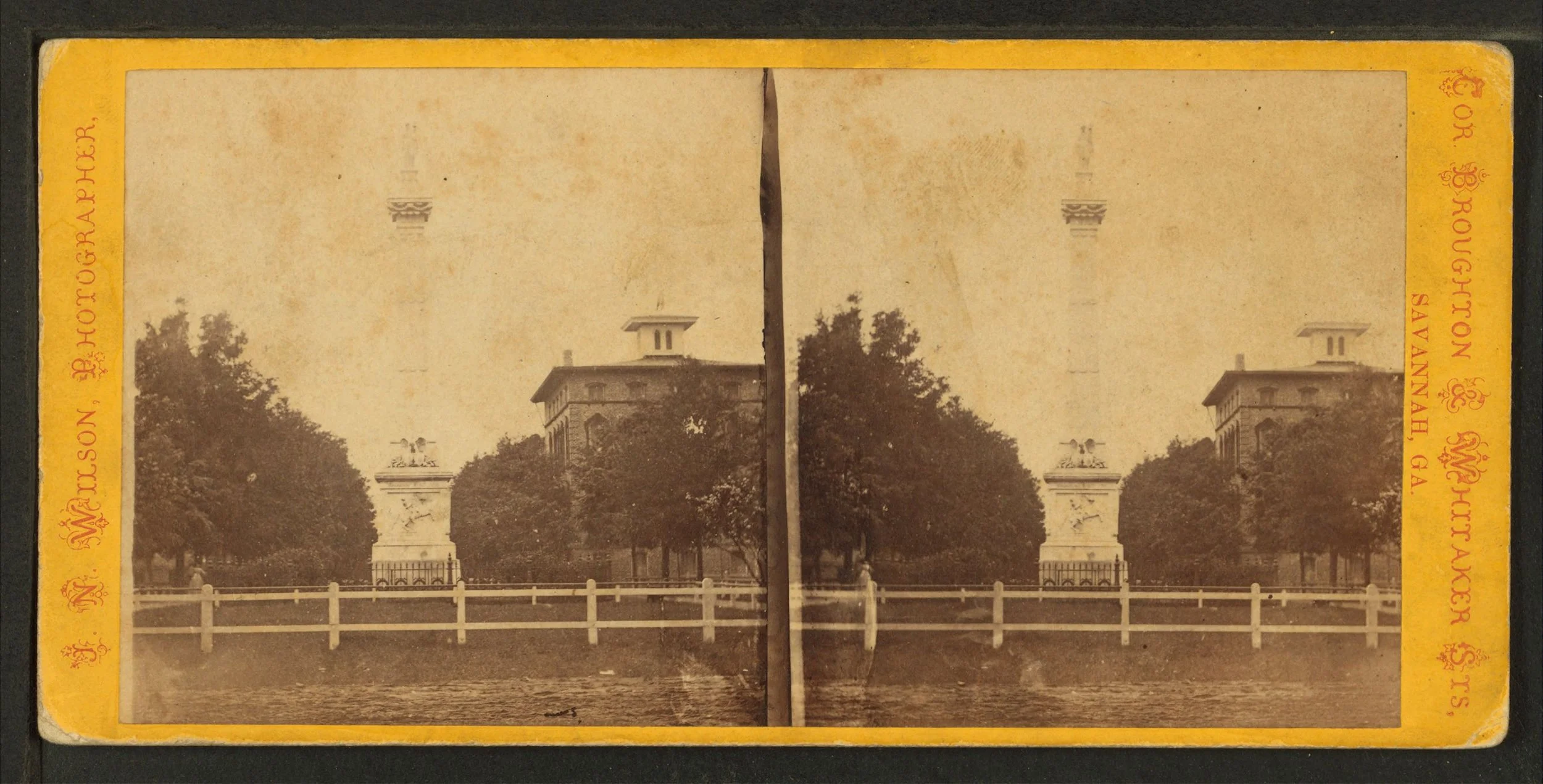
Stereograph of Pulaski Monument, 1864 Courtesy of New York Public Library1860
When construction of the house began in 1860, Monterey Square, by then thirteen years old, was already one of Savannah’s most elegant sanctuaries with the Pulaski Monument as its centerpiece. The city’s elite had already built Greek Revival and Italianate houses fronting the square and some of its grandest homes were only just beginning to rise.
Hardee would not live to see his house completed.
He passed away in 1867, and the house was finished two years later under his estate run by his widow.
1867
Double Tenement (1870-1884)
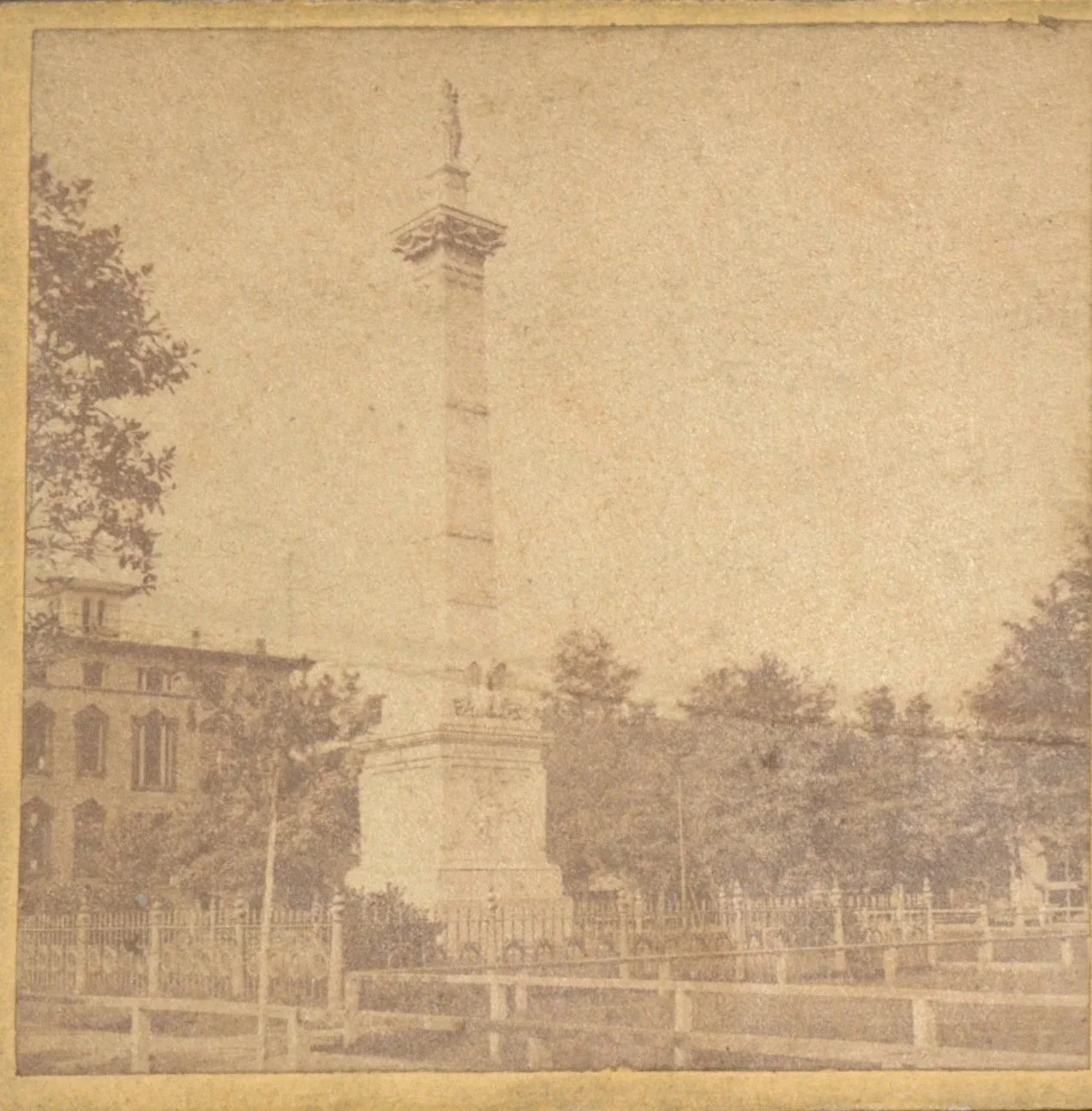
Stereograph of Pulaski Monument, c. 1860-1869 Image courtesy of the Georgia Historical Society, GHS 1361-SG-02-01-N-07Like many wealthy or upper-middle-class homes, the Noble Hardee House was fitted out with fancy and modern conveniences such as dumb waiter, speaking tubes, gas fixtures and chandeliers.
But, unlike most houses of the time, this was completed and sold not as a single-family home as originally intended, but rather as two apartments.
Through ongoing investigation, the team hopes to find remnants of the early layout of the interior.
1870
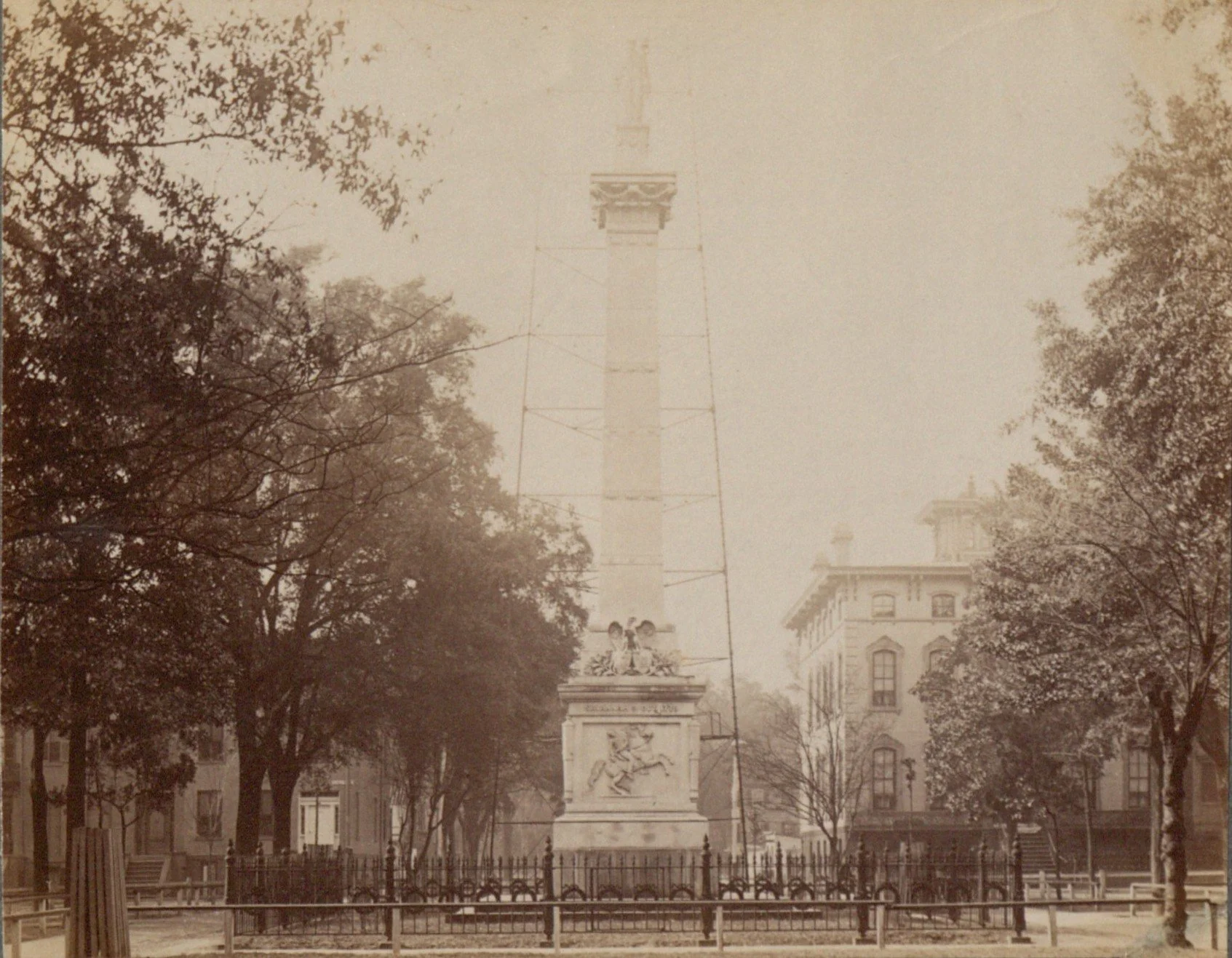
Photograph of the Pulaski Monument, c. 1888-1900 Image courtesy of the Georgia Historical Society, GHS 2126-PH-01-03A.S. Hartridge purchased the newly completed double-tenement house in 1870. Prior to the Civil War, Hartridge was a cotton producer and merchant. He went on to serve as a Confederate lieutenant and later retained much of his wealth in real estate. In addition to the Noble Hardee House, Hartridge owned several other properties near Monterey Square. It is unlikely that Hartridge ever resided in the house, as he built his own family residence at 105 Bull Street between 1870-1871.
The house at this time had the addresses of 125 and 127 Gordon Street, indicating its division into an east and west tenement. The layout of the two residences and the division of outdoor space are currently unknown, as is whether the tenants entered the units from different entrances or shared the front door.
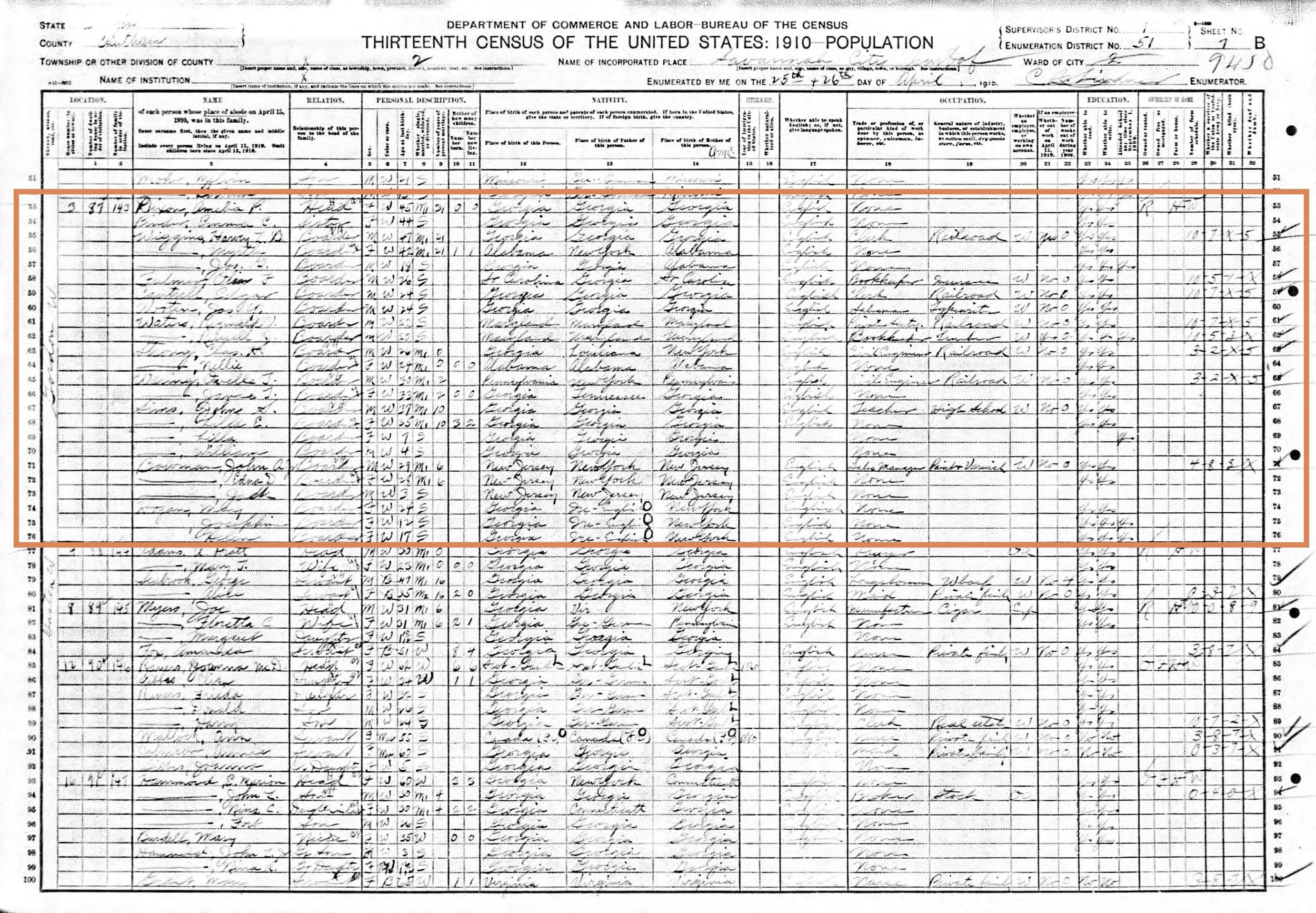
Federal census from 1900 showing the Weil family residing at 3 West Gordon and three Black servants with the last name Elmore (Betsy, Jemie, and a male servant with an illegible name)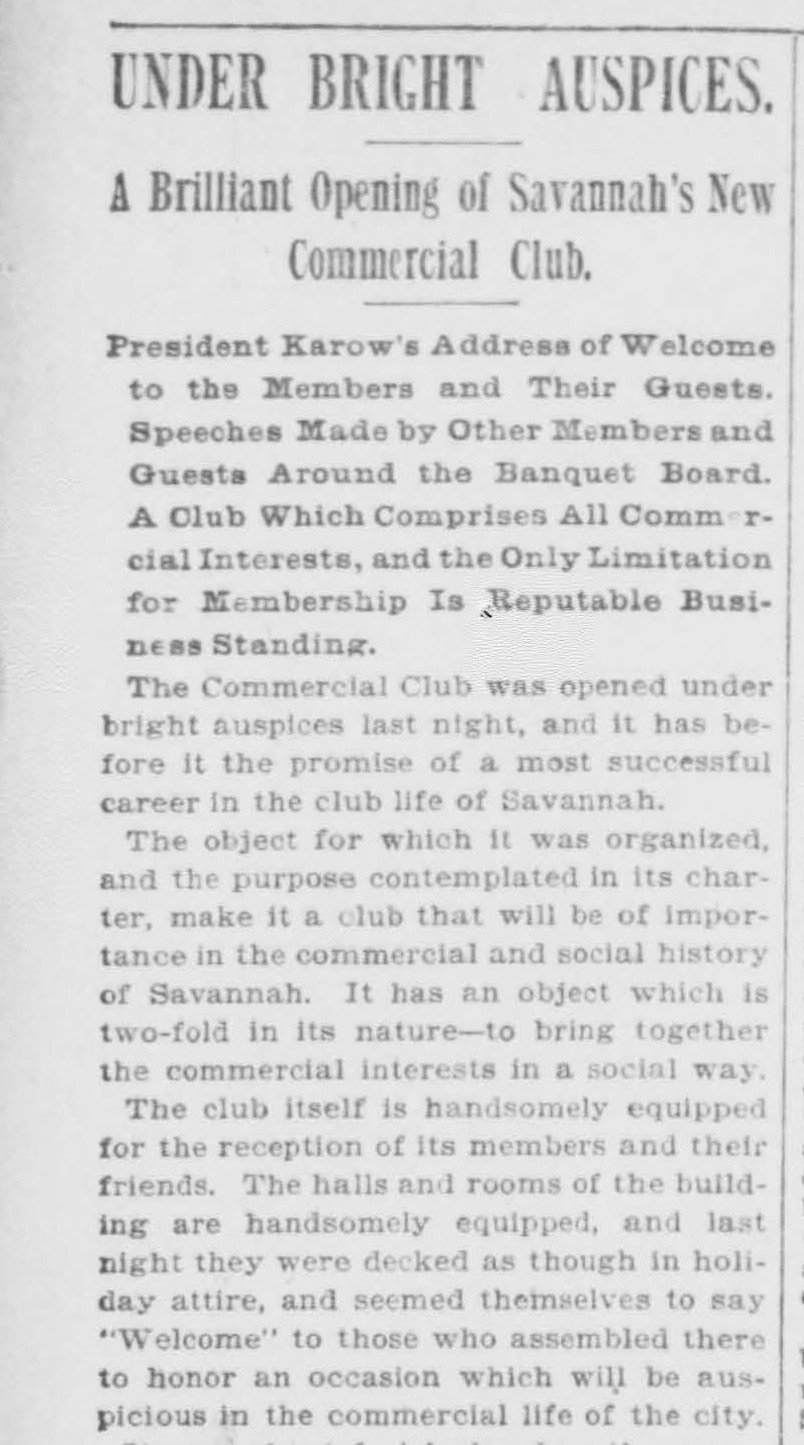
Single Family Home (1884-1907)
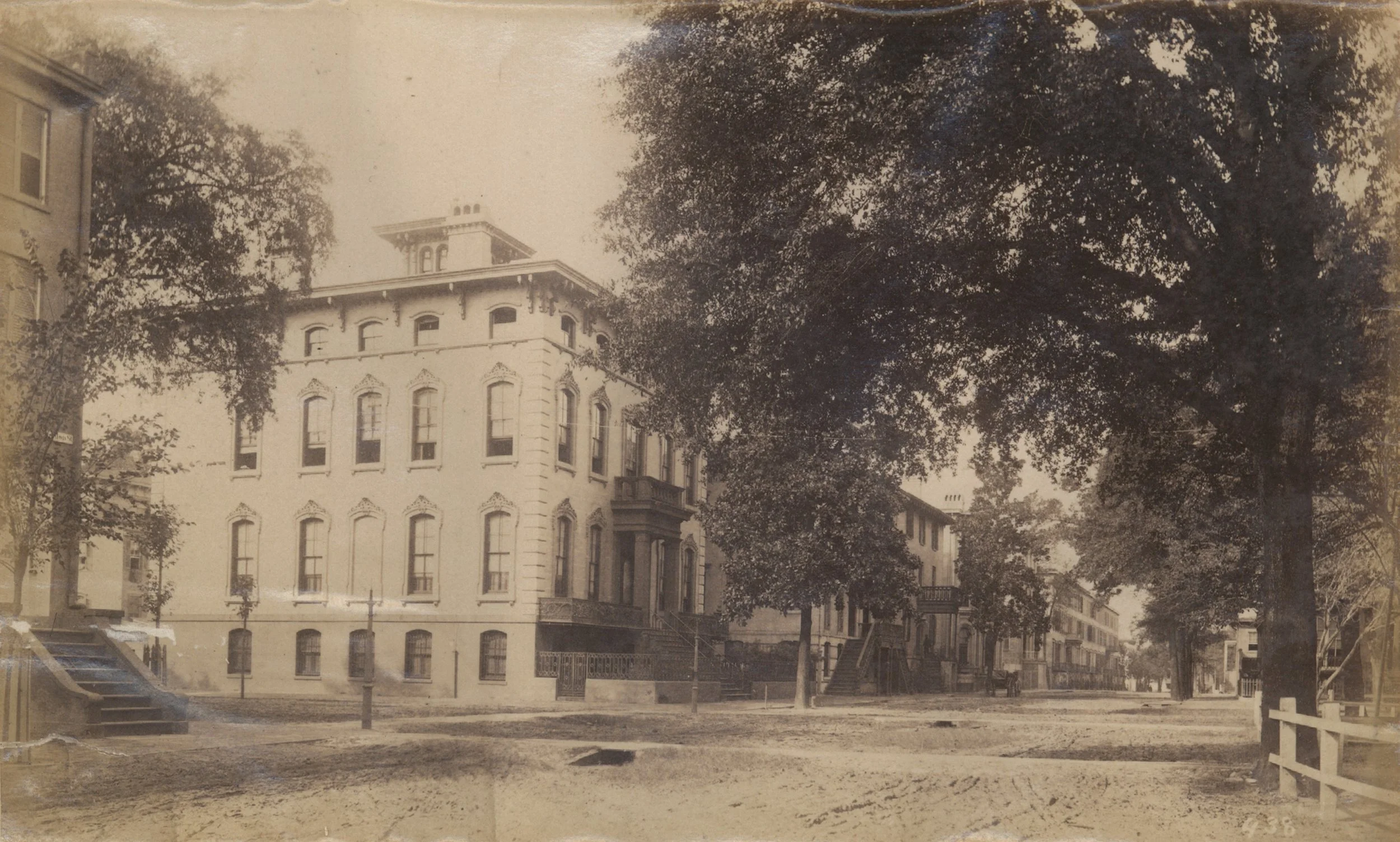
Noble Hardee House c. 1869-1894 Image courtesy of Georgia Historical Society, GHS 1375-PH-1761884
Elias A. Weil purchased 3 West Gordon Street from the estate of A.S. Hartridge in 1884. Weil’s namesake company, E.A. Weil & Co. sold shoes and boots and was located at 11 E Broughton Street.
The Weil family converted the building back into a single-family home as envisioned by Noble A. Hardee. Weil also made changes to the exterior of the house, possibly installing the front balcony and later extending the balcony to the eastern facade.
Article from the Savannah Morning News October 30, 1894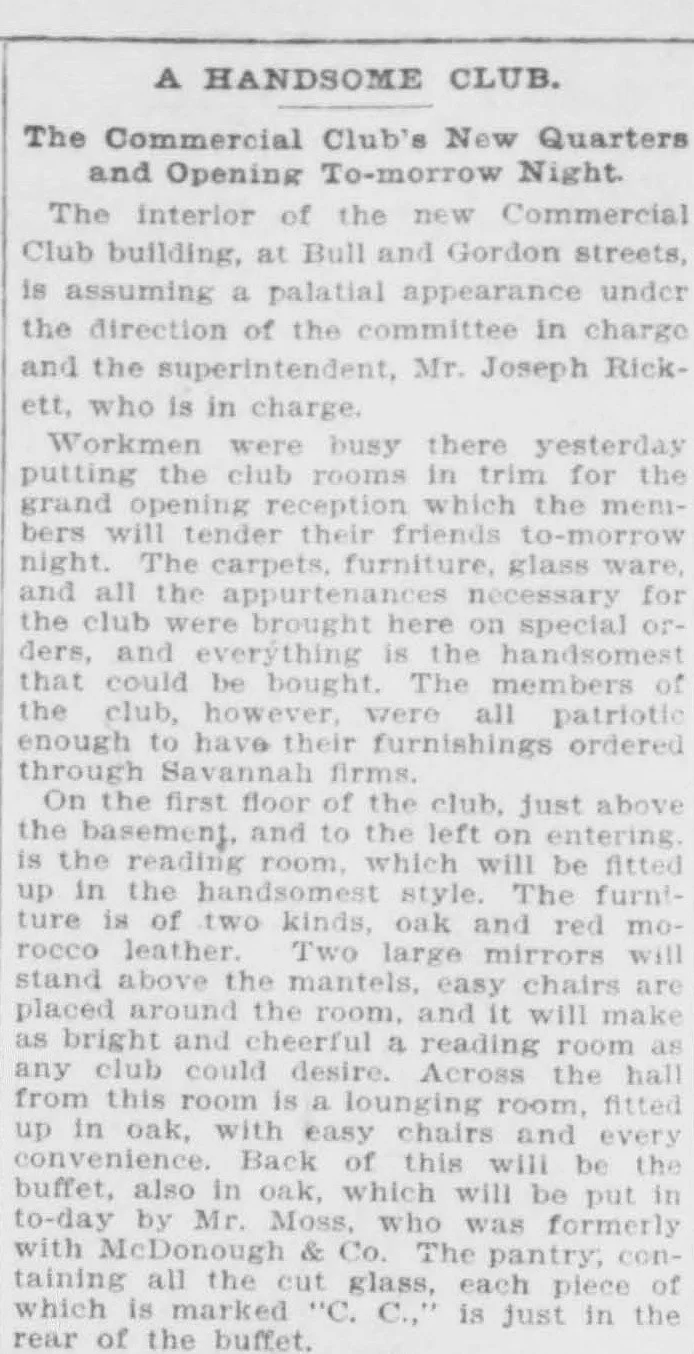
Article from the Savannah Morning News November 1, 18941894
In 1894, after a decade of living in the house, Weil sold it to the Commercial Club, a fraternal club that moved its headquarters to the building.
An article in the Savannah Morning News from the club’s opening indicates that “the rooms with the exception of the moveable furnishings were just as Mr. Weil left them.”
1906
Probably for the best that very little was changed. The club sold the building back to the family after only a year and the house once again became the Weil family’s primary residence. A decade after the family moved back in they made additional changes to the exterior of the building by enclosing the back gallery.
The house was occupied by members of the Weil family – E.A. Weil’s widow Babette and his son Arthur Weil – until 1906, giving this family the title of the longest-running residential tenants of the building.
Elias A. Weil purchased 3 West Gordon Street from the estate of A.S. Hartridge in 1884. Weil’s namesake company, E.A. Weil & Co. sold shoes and boots and was located at 11 E Broughton Street.
The Weil family converted the building back into a single-family home as envisioned by Noble A. Hardee. Weil also made changes to the exterior of the house, possibly installing the front balcony and later extending the balcony to the eastern facade.
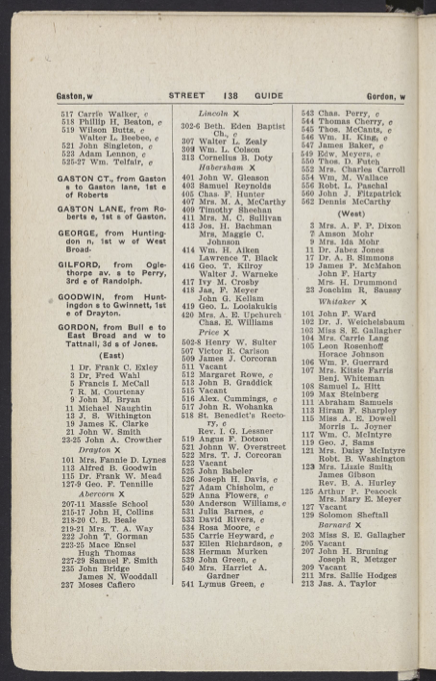
Savannah City Directory identifying residents and local businesses, 1910, showing Amelia F. Dixon as the main resident of 3 West Gordon St.Boarding House (1907-1920)
1907
By 1907 the house was still owned by the Weil family but it had been converted into a boarding house and was run by Mrs. Amelia F. Dixon. City directory and census records indicate that Dixon herself lived in the home from 1907-1910.
1910
The 1910 census includes 24 residents of the house, including Dixon. All the boarders at this time were all white, ranging in age from 3 to 47 and included single women and men, married couples, and small families. Occupations included clerks, bookkeepers, salesmen, a secretary, a civil engineer, a teacher, and a saloon manager.
1912
In 1912 the Weil family sold the house to Jennie Dub, and she and her husband continued to use the property as a boarding house until 1920.
The interior layout of the house during this boarding house period is unknown, but given the number of tenants it is likely that there were many subdivisions within the current layout.
Federal census from 1910 indicating Amelia F Dixon running a boarding house with 22 boardersTenement & Ground Floor Business
(c. 1920s-1940s)
The Dub family sold the house to V.G. Shreck in 1921 and, at this time, the occupancy and use of the house becomes less clear.
1921
1935
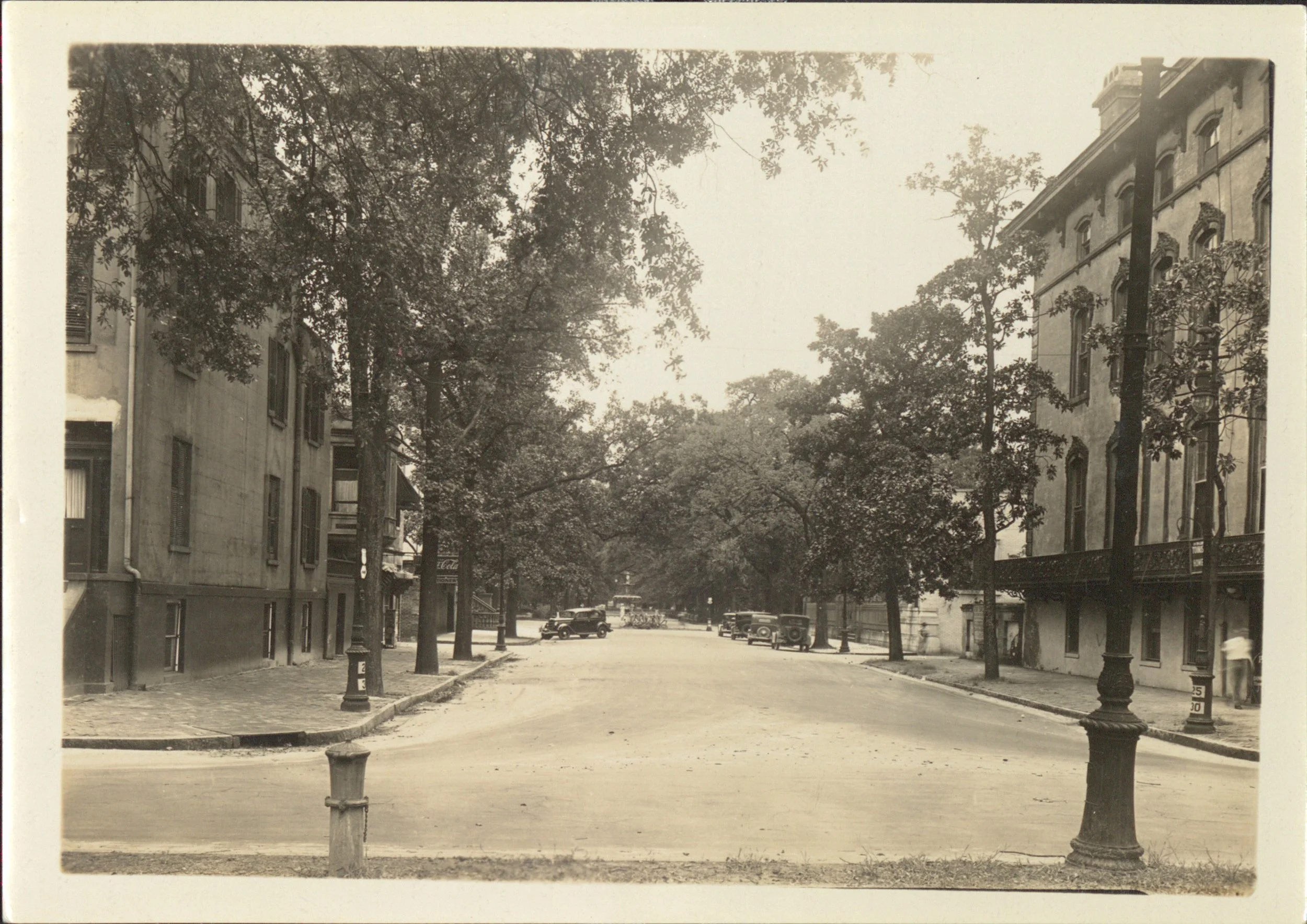
During the late 1930s an additional address of 441 Bull Street is associated with the building. A photo dated c. 1935 shows that the northern window on the basement level of the Bull Street facade had been converted to a door, likely providing access to a ground floor business.
Bull Street looking South toward Forsyth Park c. 1935, after the Bull st. entrance was installed. Courtesy the Georgia Historical Society , GHS 1360-PH-11-19-05Article about the Veterans Guidance Center based in the basement of the Hunt Building when Armstrong Junior College owned the buildingStudents outside of the Hunt BuildingArmstrong Junior College (1945-1960)
1945
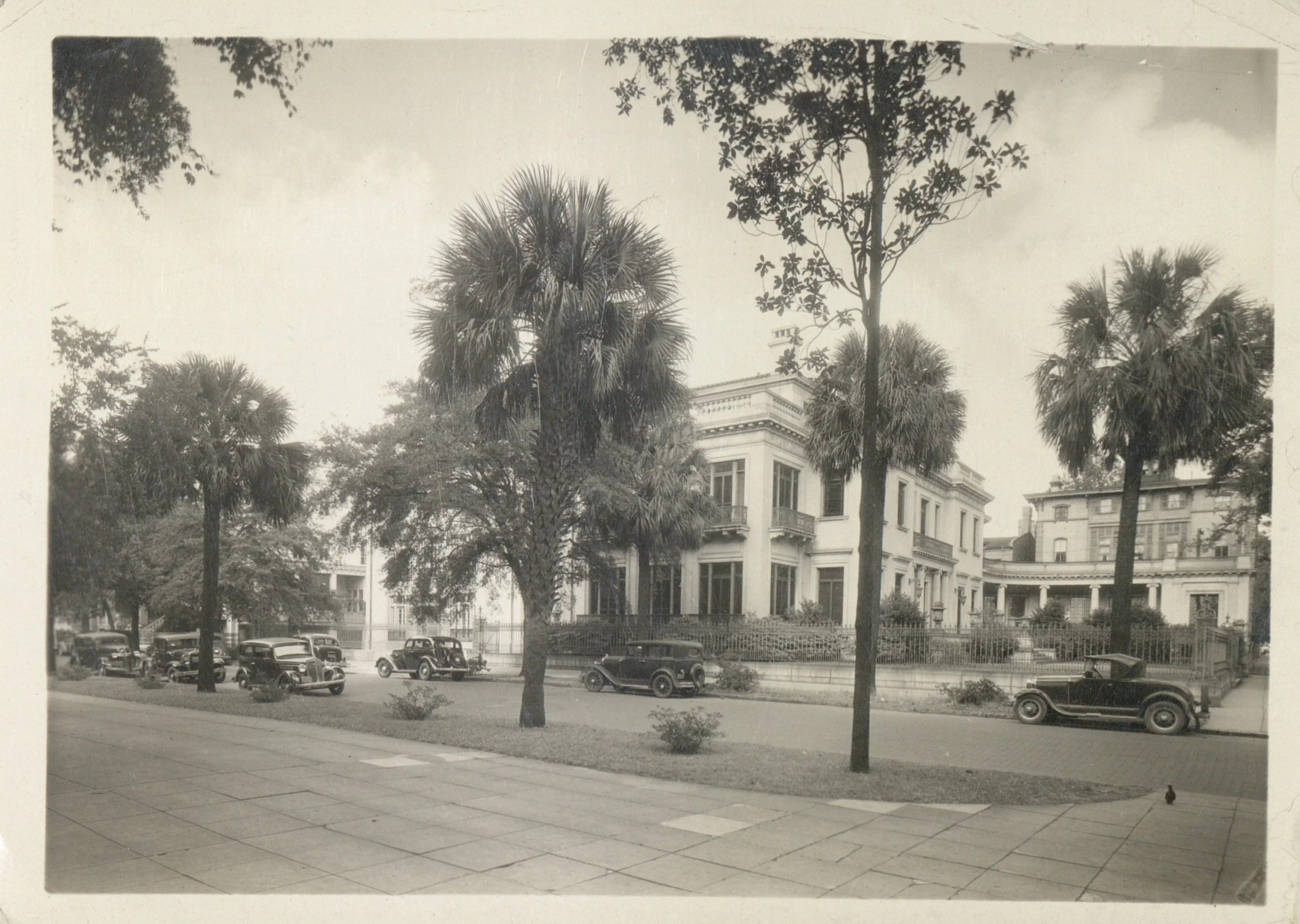
By 1945, Armstrong College’s student body was rapidly expanding and there was a need for additional space. The college purchased the Noble Hardee House, conveniently located just north of its main building.
Armstrong Junior College c.1940 with the Noble Hardee house in the background. Image courtesy of the Georgia Historical Society, GHS 1360-PH-03-24-01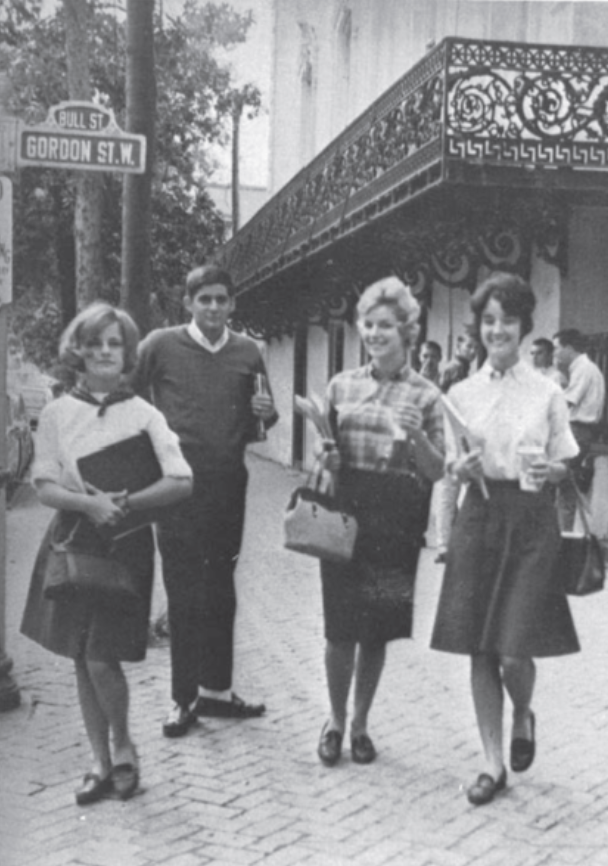
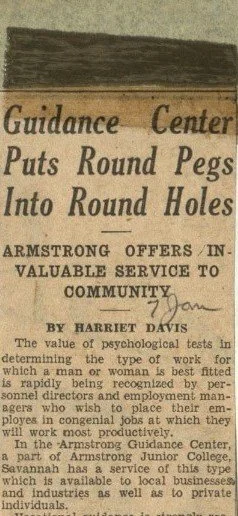
Initially, the college used the basement, accessible via an entrance on Bull Street, as its Veterans Administration Guidance Center. The upper floors were used for receptions and club gatherings, and also provided space for the home economics department. The top floor was used as a dance studio.
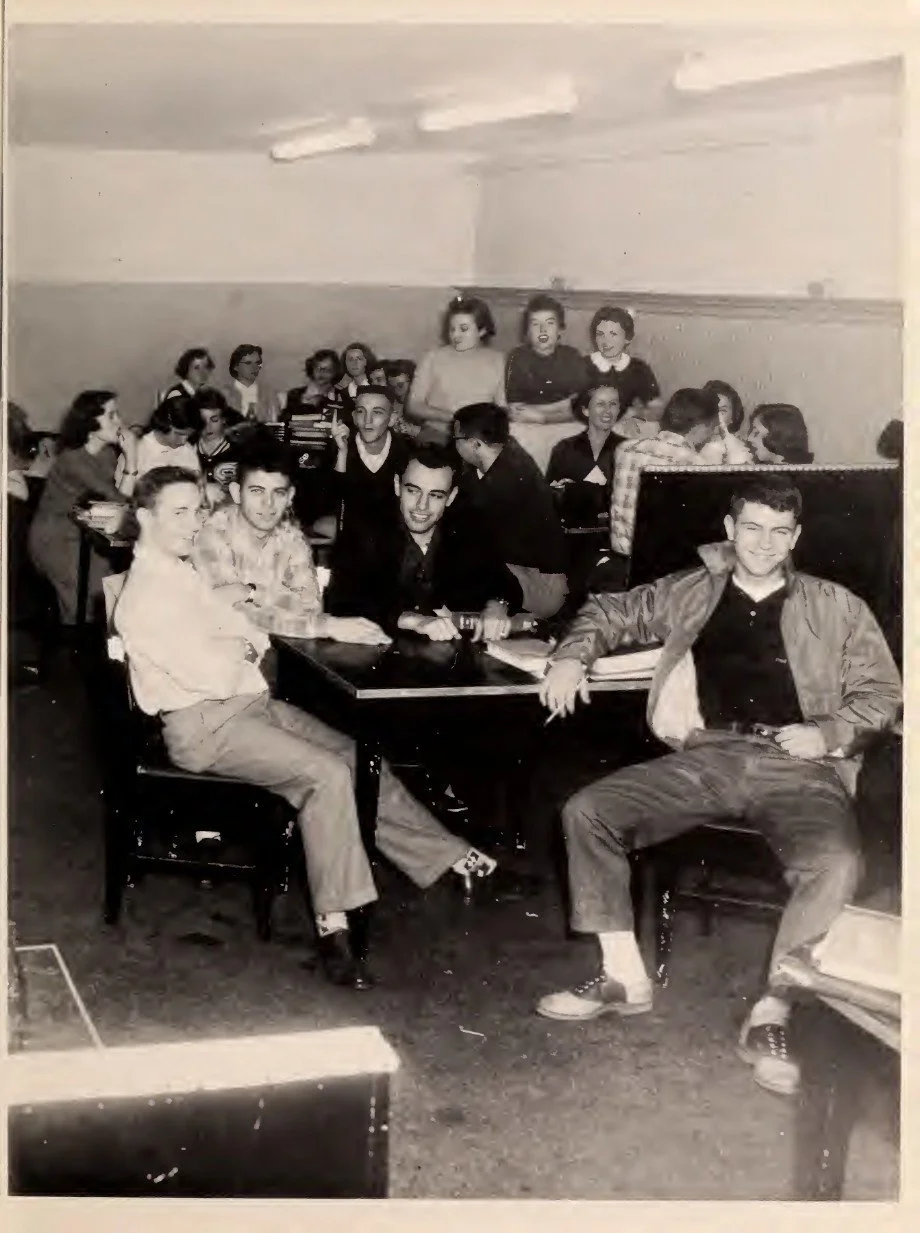
Image of the Dump from the 1956 Geechee yearbook. Image Courtesy of Georgia Southern UniversityThe basement space was eventually transformed into a cafeteria and in 1949 became a popular spot for students called “The Dump,” known for its lively atmosphere complete with music and card games.
Armstrong College sold the Noble Hardee House to the Regents of the University System of Georgia in 1960, when the college moved to its new campus away from downtown Savannah.
1949
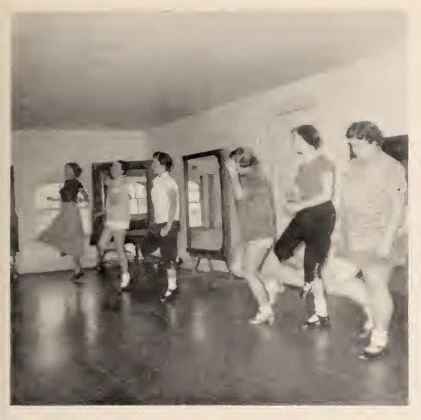
Image of the third floor dance studio from the 1955 Geechee yearbook. Image Courtesy of Georgia Southern UniversityHistoric Savannah Foundation (1966-1968)
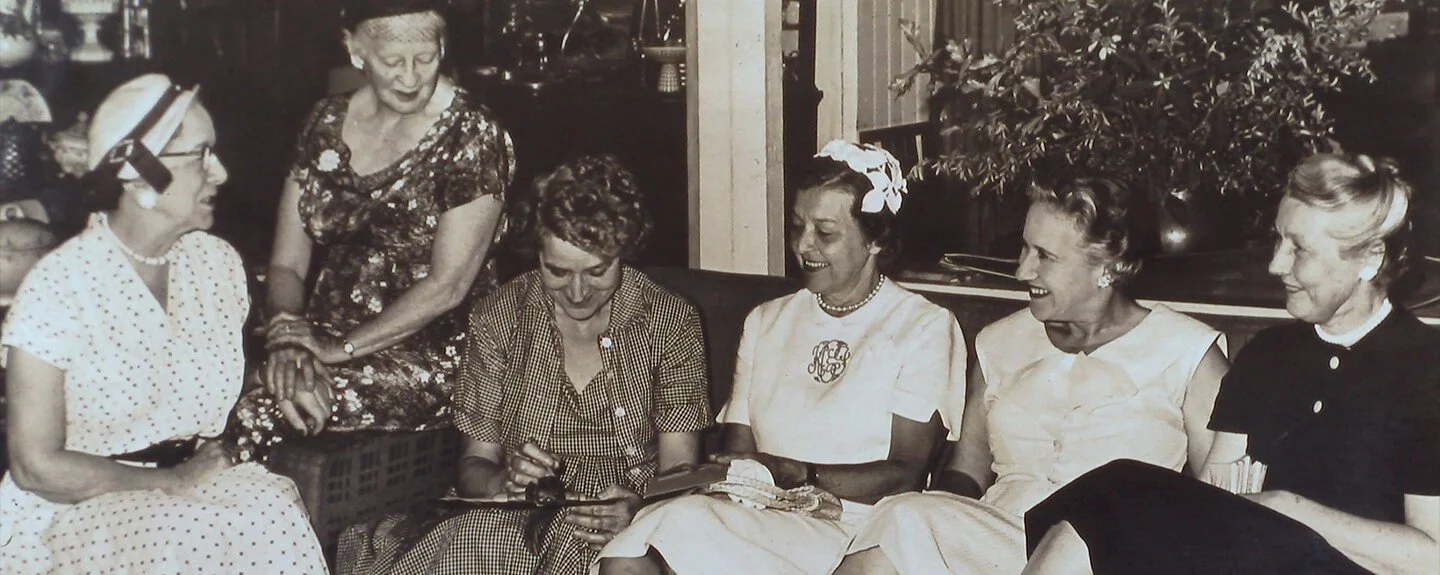
The seven founders of the HSFThe Historic Savannah Foundation (HSF) acquired the Noble Hardee Mansion in 1966, a period when historic buildings in downtown Savannah were under threat. Founded in 1955, part of HSF’s strategy was to create a revolving fund for the purchase of buildings immediately at risk of demolition. Buildings would be purchased by the foundation and then resold to a buyer that intended to upkeep the property.
1966
A year later, HSF sold the house to the Continental Construction Co. with a new easement on the property that allowed HSF to oversee changes to the exterior of the building. This easement is still in place today and is one of over 400 easements that HSF holds on historic properties in Savannah.
1967
Image from Savannah Morning News (September 6, 1968) announcing the purchase of the property at 3 West Gordon as the new association headquarters. Image courtesy of the Georgia Historical Society, collection Number: 1349, Box 62, Folder 1083Savannah Arts Association (1968-1973)
1968
In 1968, the Savannah Arts Association purchased the building as their headquarters. The first noted renovations included the installation of air conditioning and a new kitchen. The basement was used as classroom space for community art classes and the upper floors were used as gallery, studio, and office spaces.
Image from the Savannah Morning News. Courtesy of the Georgia Historical Society, Collection Number: GHS 1849, Box 5.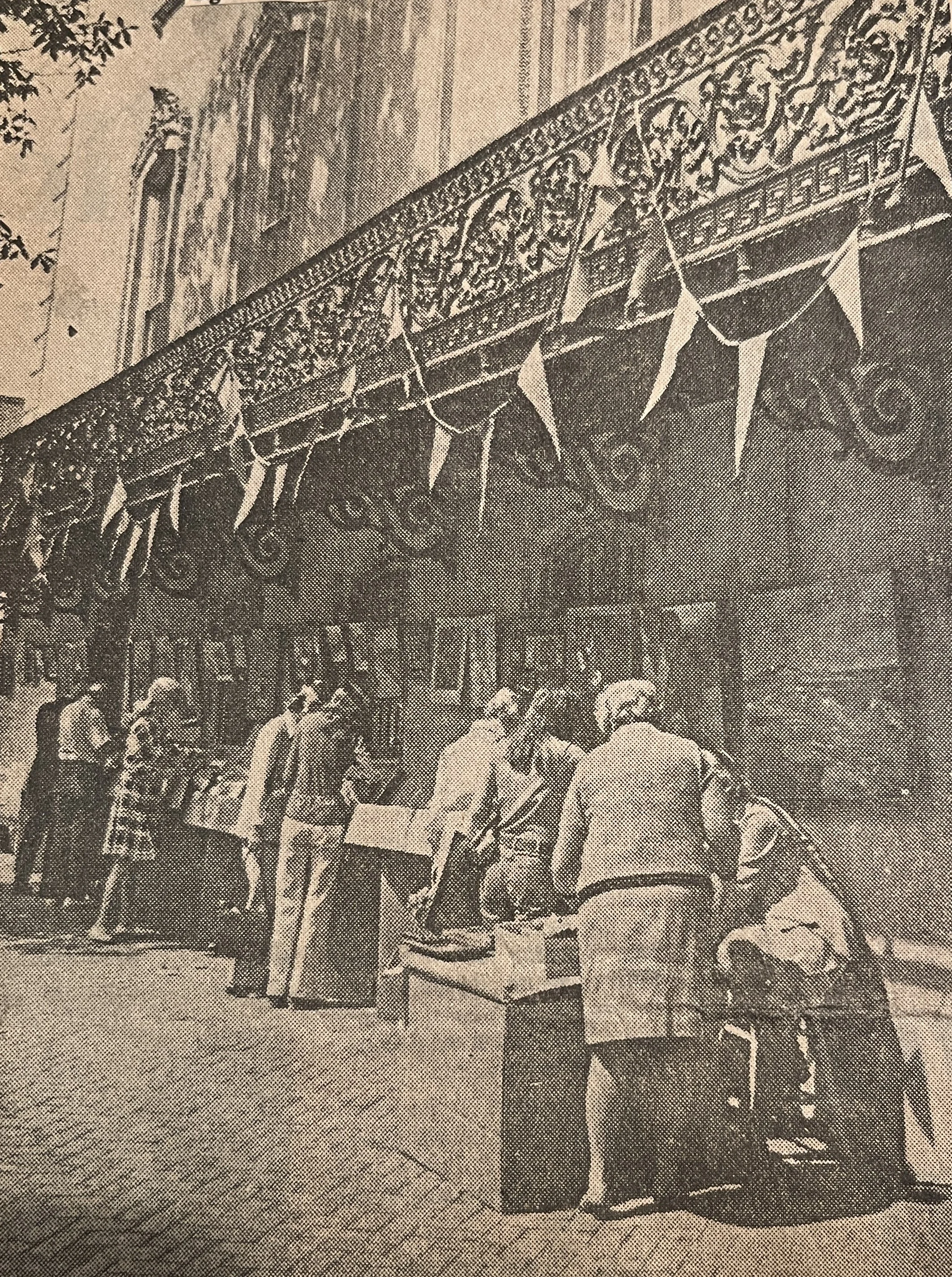
1970
The building also became a focal point for Savannah Arts Festival celebrations, which were held in Monterey Square or nearby Forsyth Park. Notably, an art flea market was hosted underneath the Bull Street balcony for local artists to sell affordable art works to the community.
Savannah Arts Association hangs paintings off of the balcony. Image from the Savannah Morning News. Courtesy of the Georgia Historical Society, GHS 1349, Box 62, Folder 1083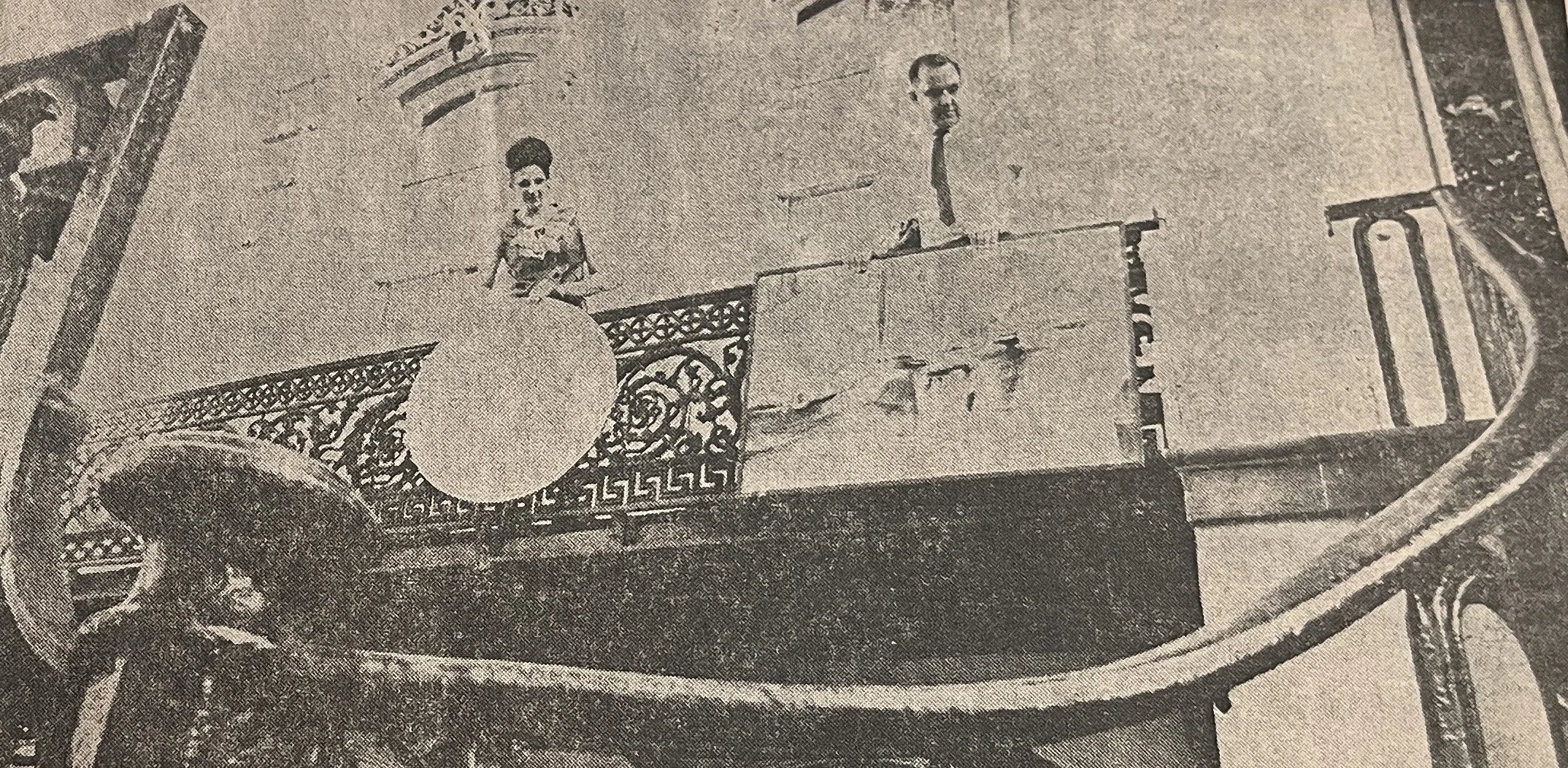
Modern Era (1972-Present)
Between 1973 and 2024 the Noble Hardee House was owned by five different owners, who seemingly made very few changes to the building. Ruth C. McGuire purchased the house in 1973, possibly using the upper floors as a residence and the lower floors as the showroom for her interior design business. Within two years she sold the property to Ashcraft and C&S/Savran Trust Co; however, there is no record of the use of the house during this period of ownership from 1975 to 1990.
1973
1991
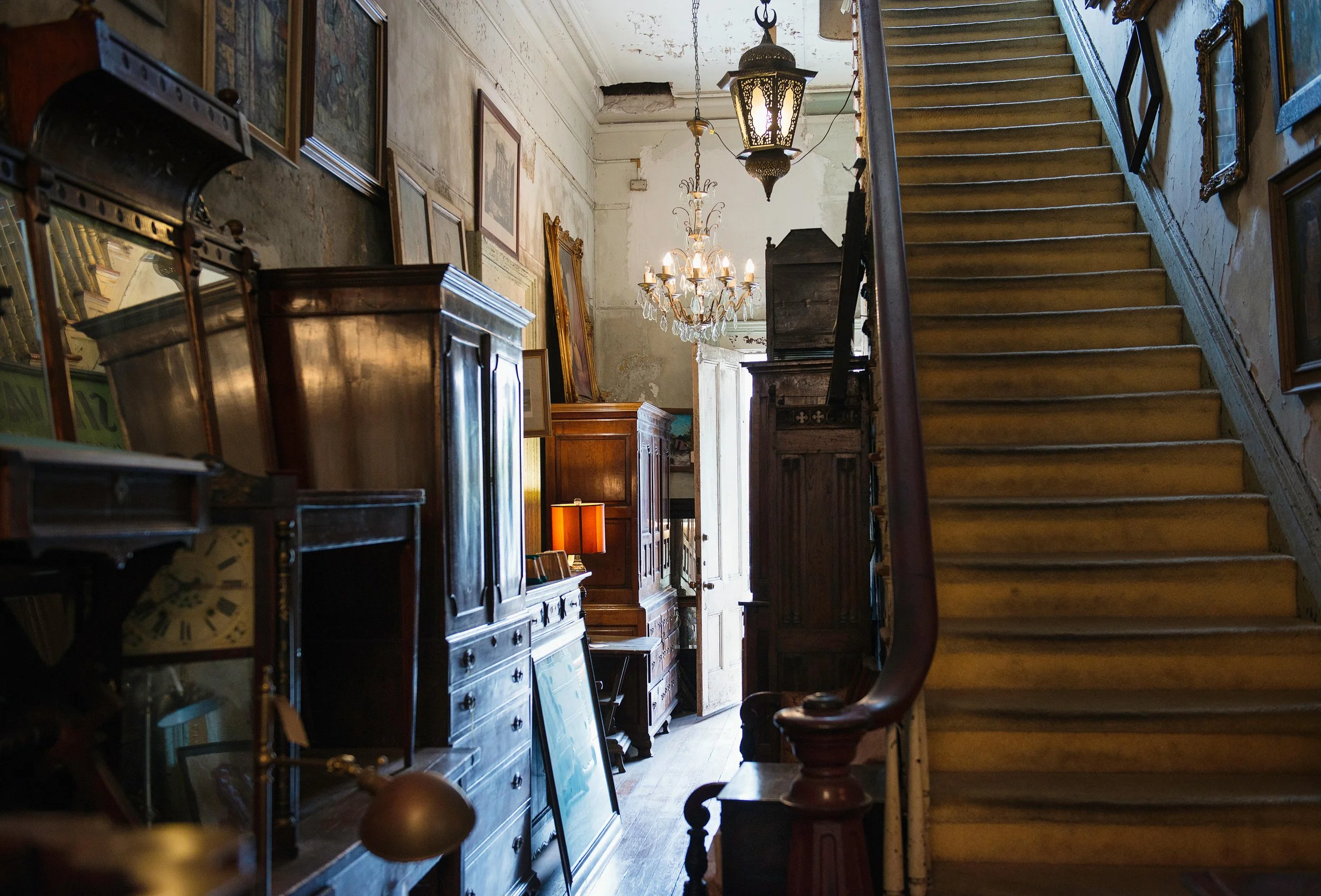
In 1991, the property was sold to Alexander Raskin who used the house as the storefront for his antiques business, and stored furniture throughout the house. Sometime during this period, the back patio or gallery was likely restored to its original open layout after being enclosed since as early as 1904.
Ralston College purchased the house in 2022 with the intention to convert the building to classrooms, event space, offices, a café, and a library. The college completed only preliminary work before selling the property in January of 2025.
2022
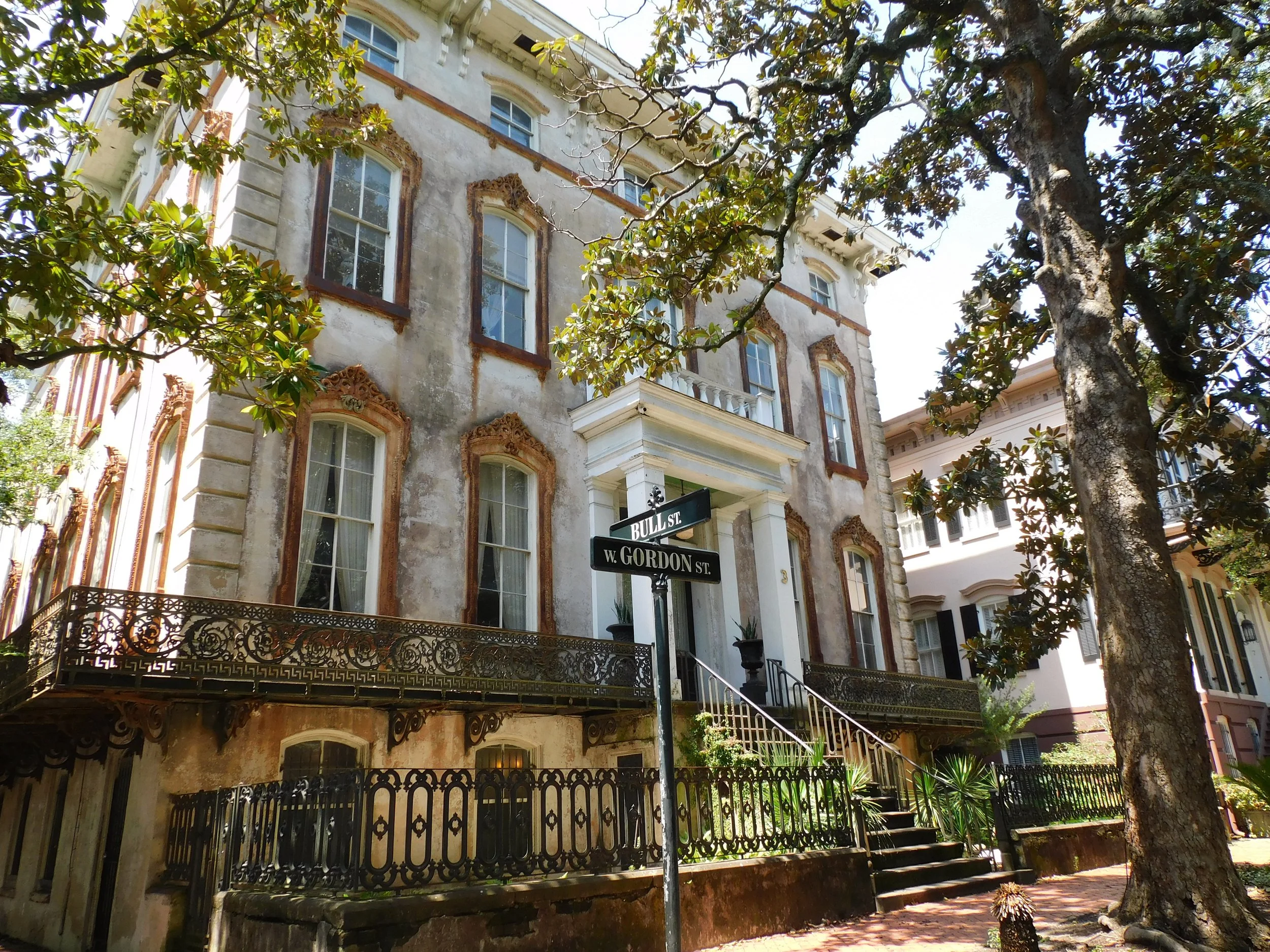
Now
Today, the Noble Hardee House is the focus of an architectural conservation effort rooted in respect for its history and original design.
We invite you to follow along as restoration unfolds.
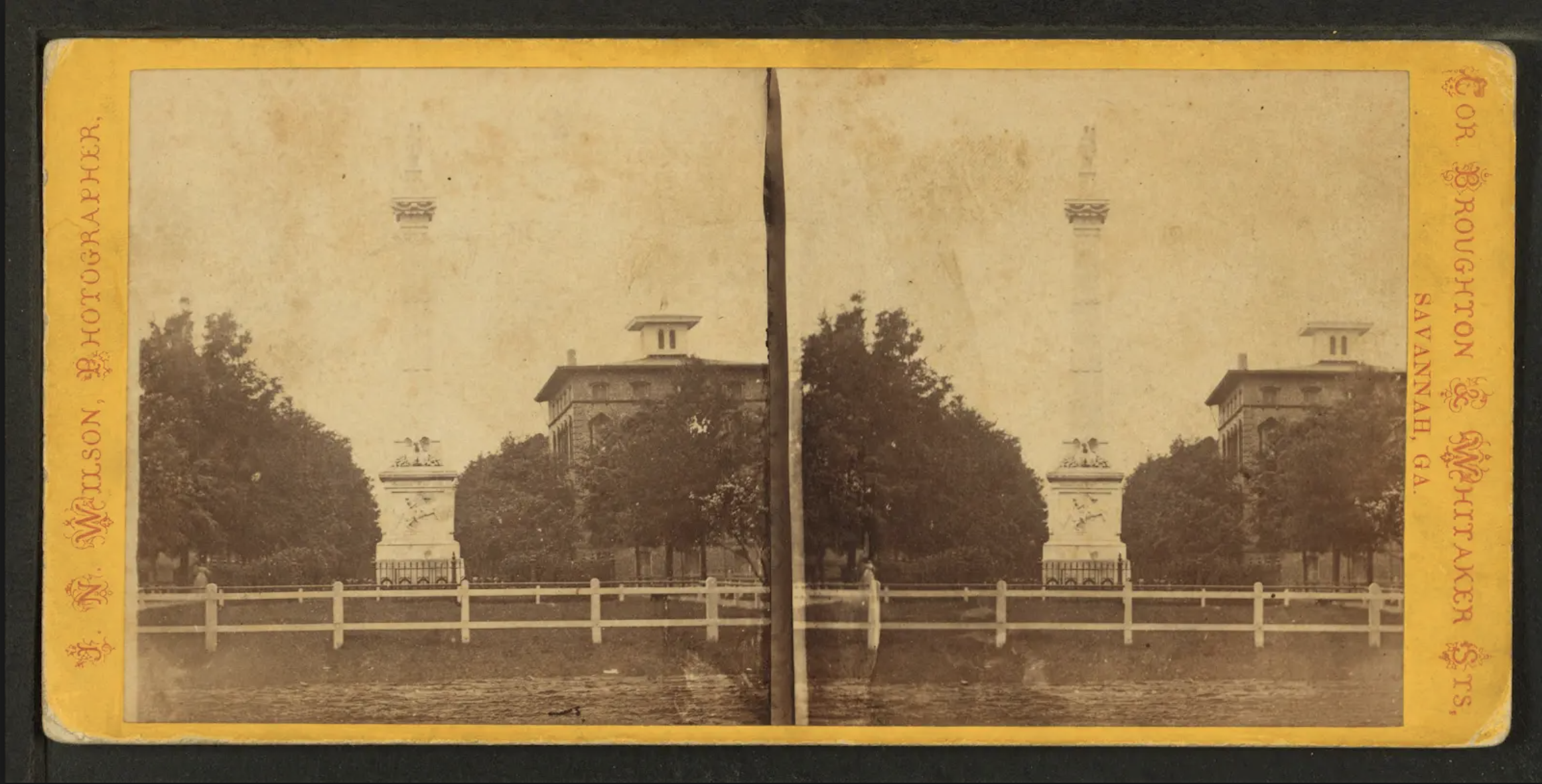
Stereoscopic view of the Pulaski Monument from the NYPL Robert N. Dennis collection of Stereoscopic views dated 1864. Noble Hardee House visible to the right of the Pulaski Monument.
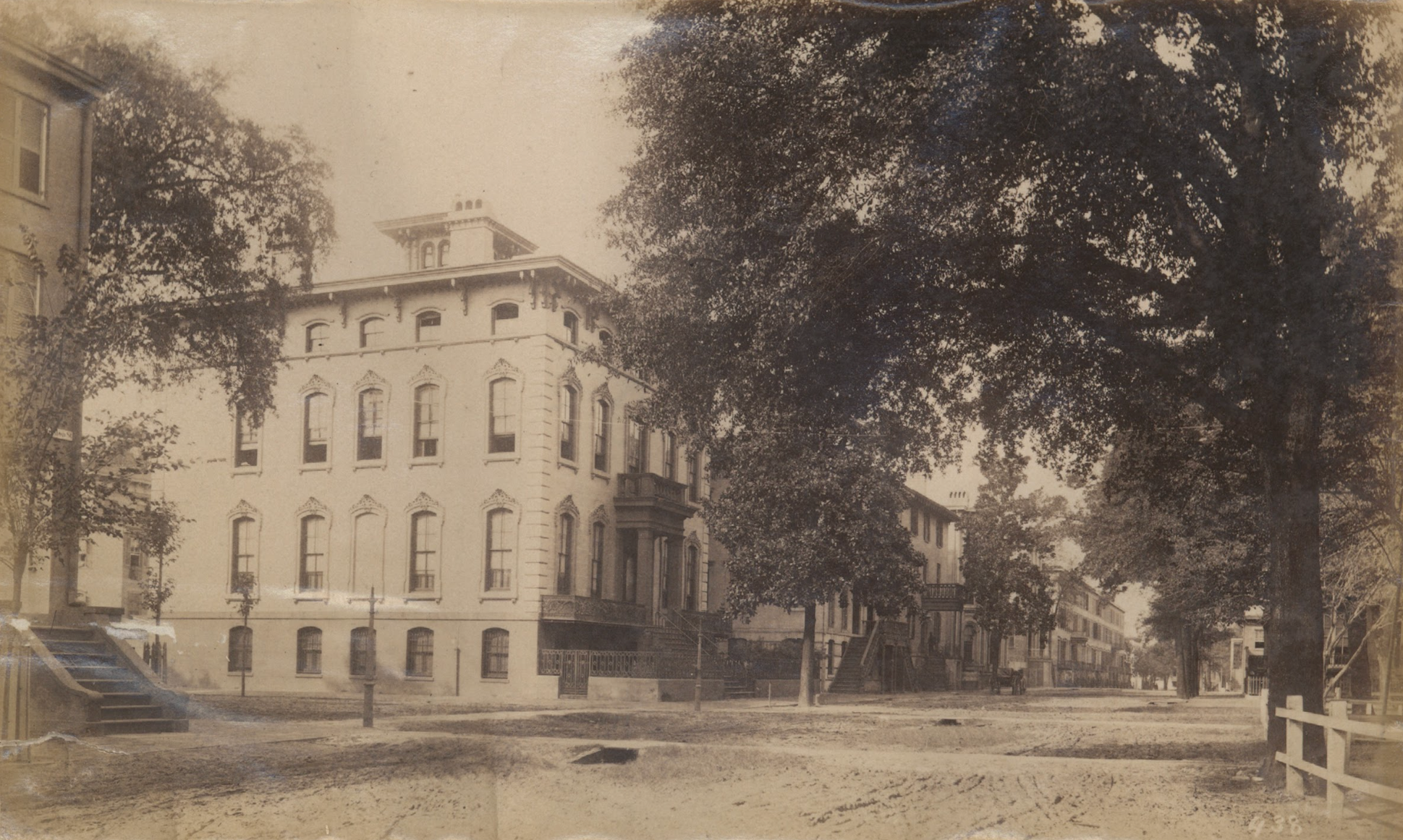
Image of the house c.1880s courtesy of the Georgia Historical Society, GHS 1375-PH-001-0171
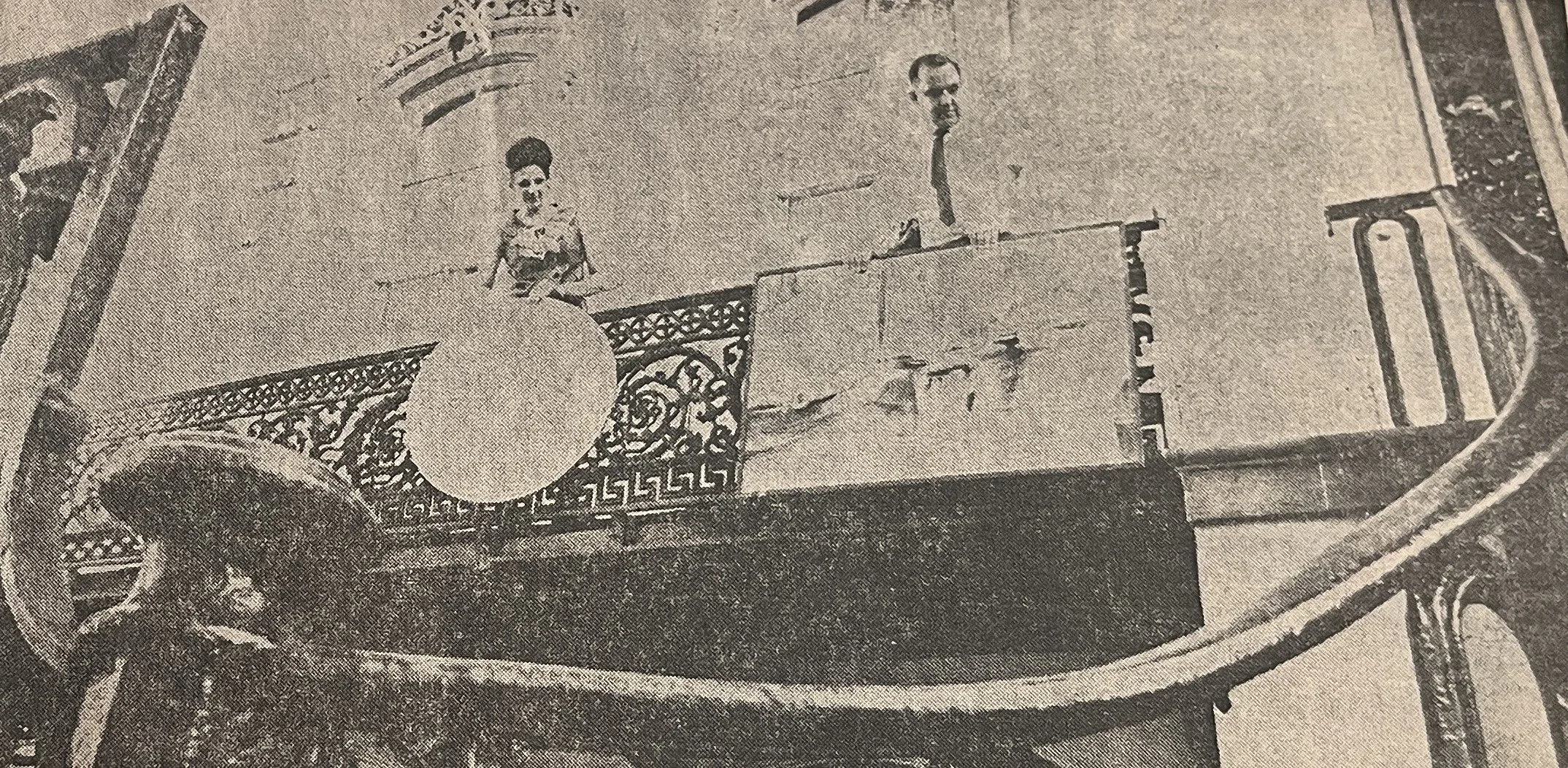
Savannah Arts Association hanging paintings off of the balcony. Courtesy of Georgia Historical Society, GHS 1349.
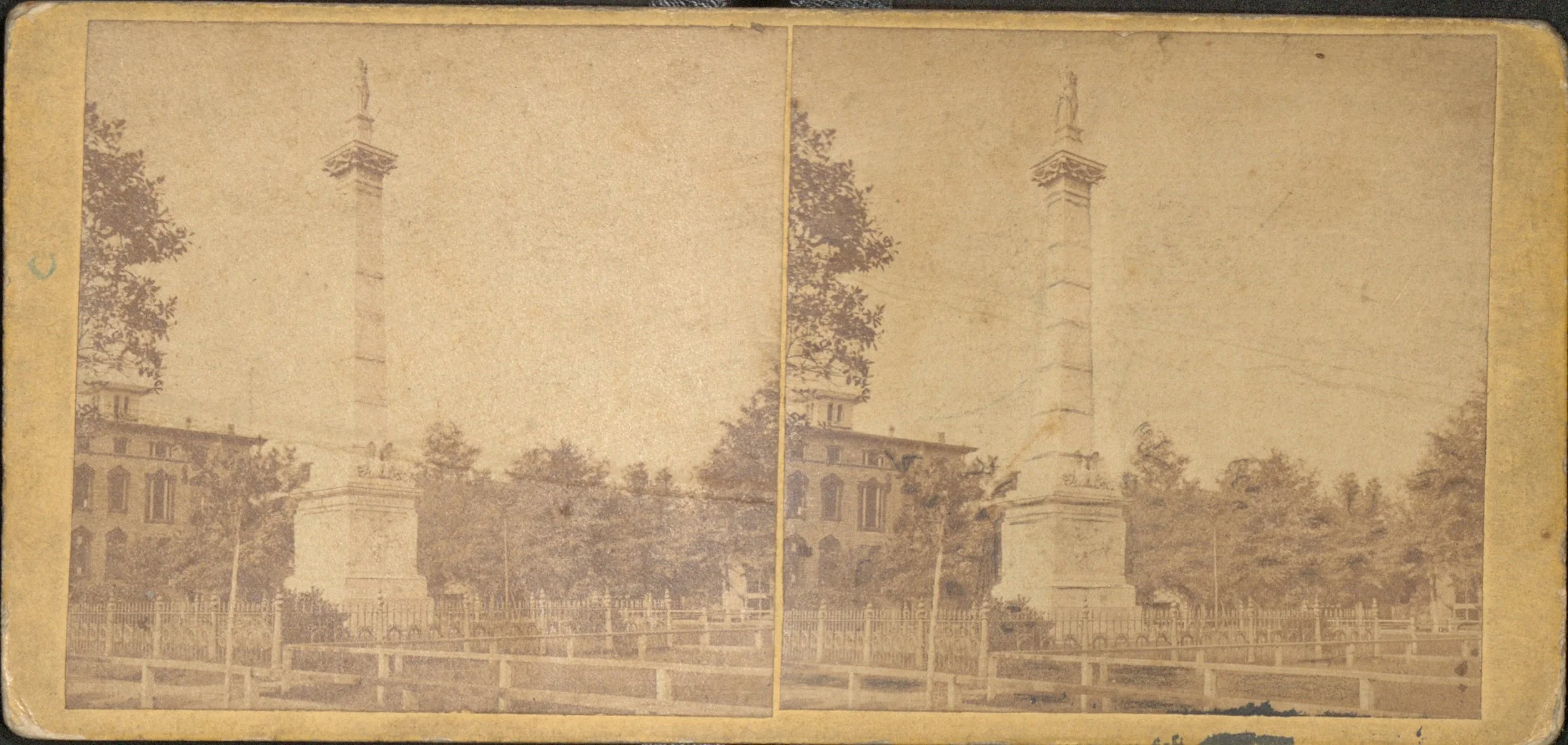
Stereograph of the Pulaski Monument, courtesy of the Georgia Historical Society, 361-SG-02-01-N-07.
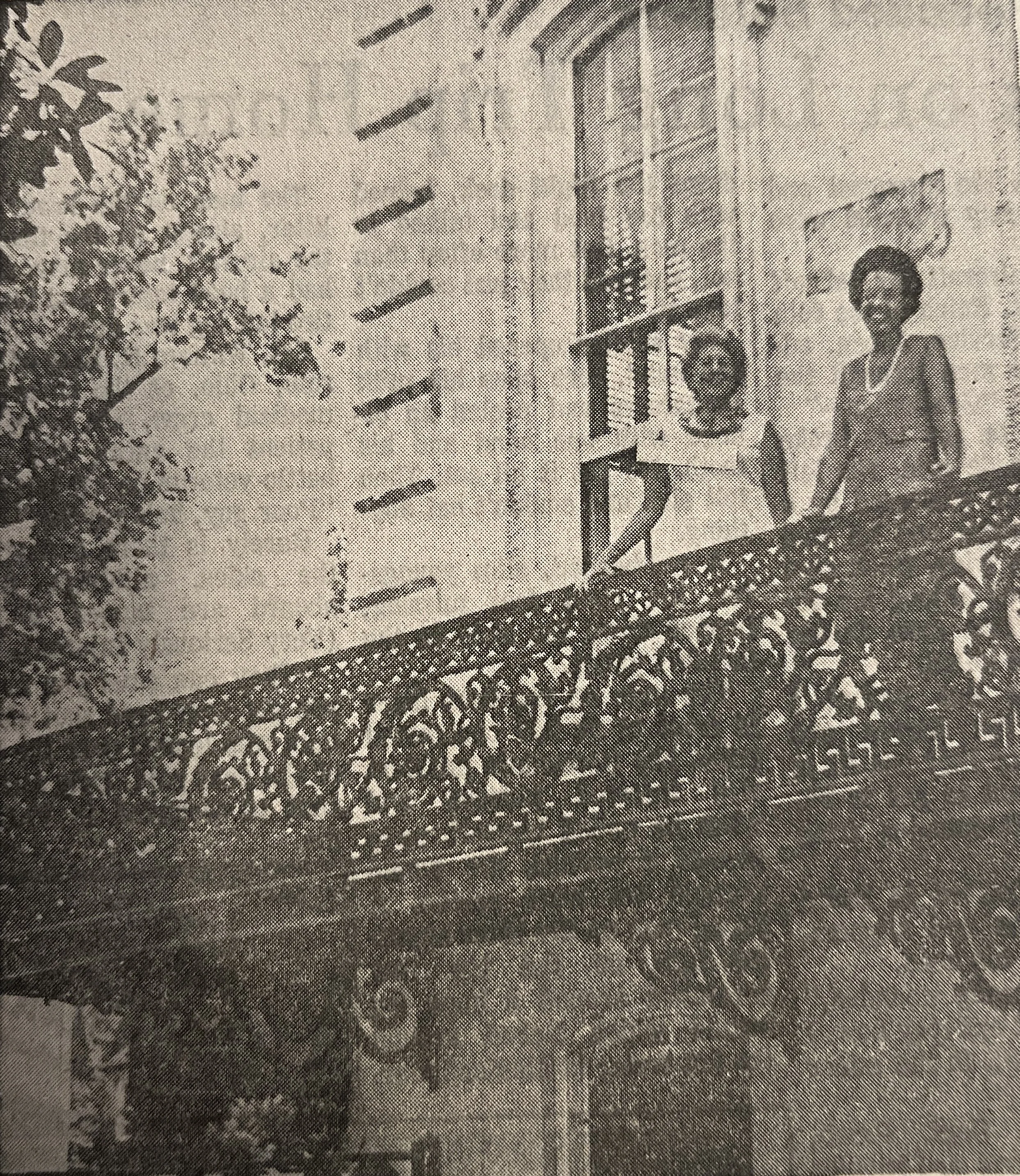
Savannah Arts Association benefit announcement after purchasing the Noble Hardee House. Courtesy of Georgia Historical Society, GHS 1349.
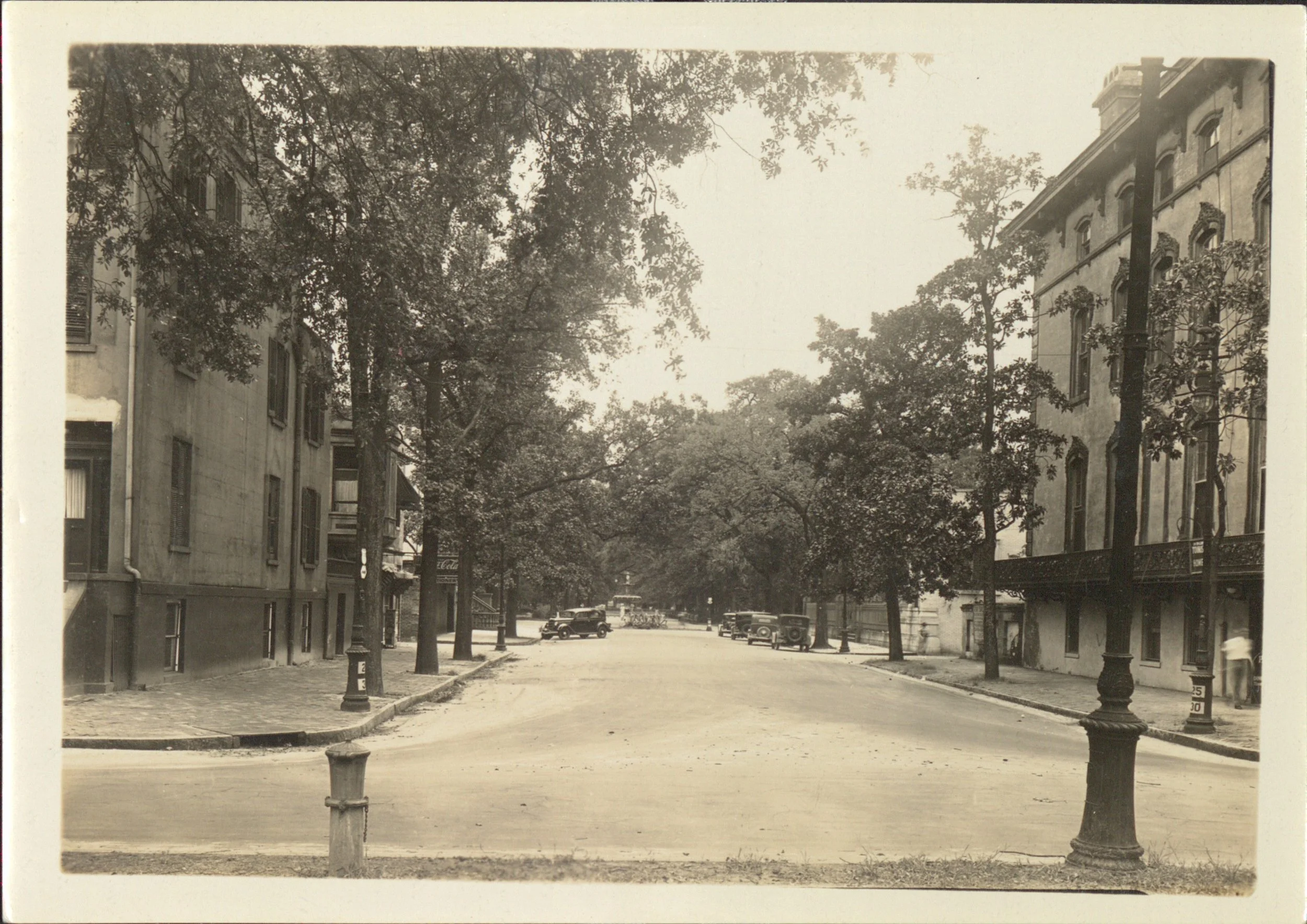
Image of Bull St. c.1930s. Courtesy of Georgia Historical Society, GHS 360-PH-11-19-05.
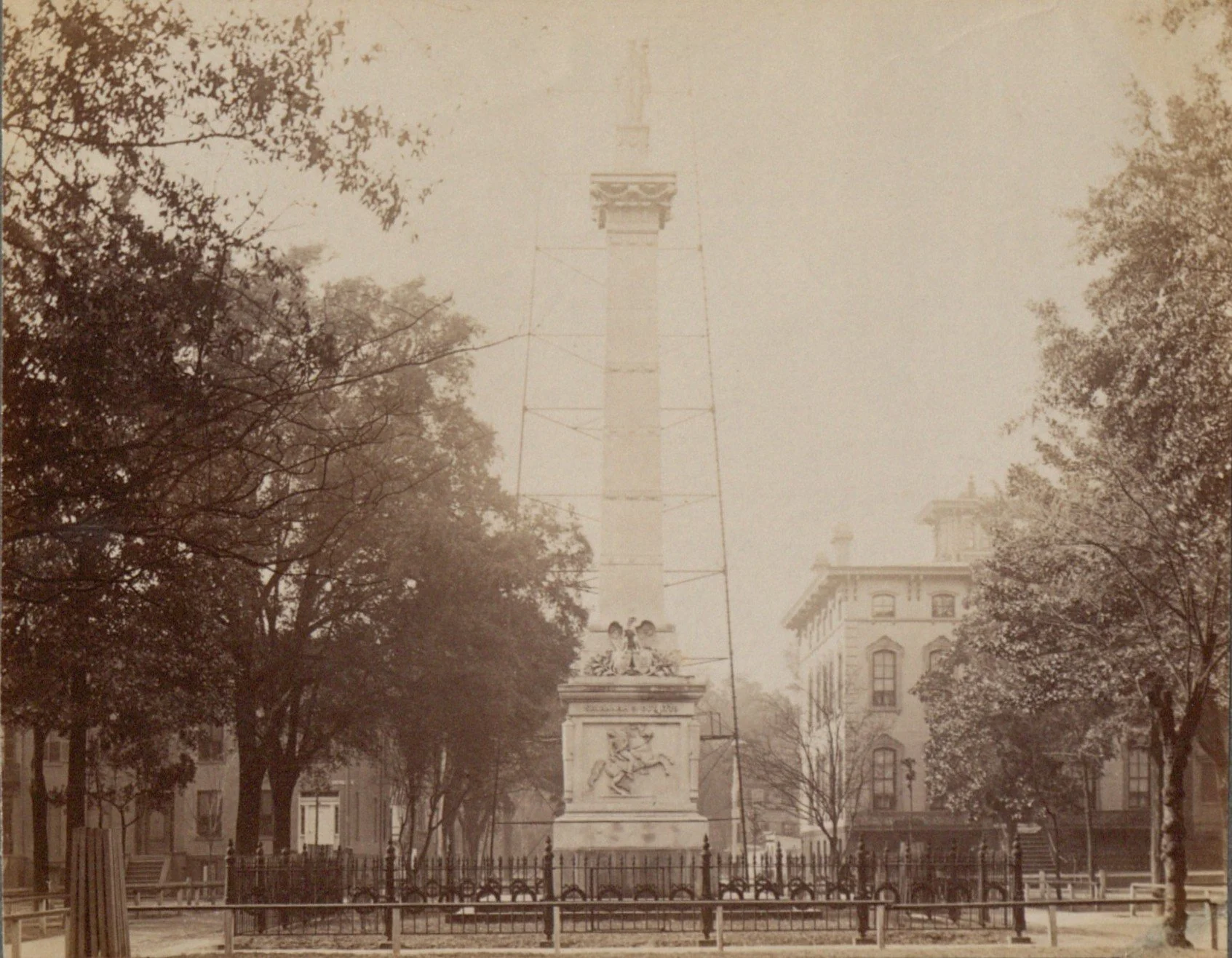
Picture of the Pulaski Monument. Courtesy of the Georgia Historical Society, GHS 2126-PH-01-03.
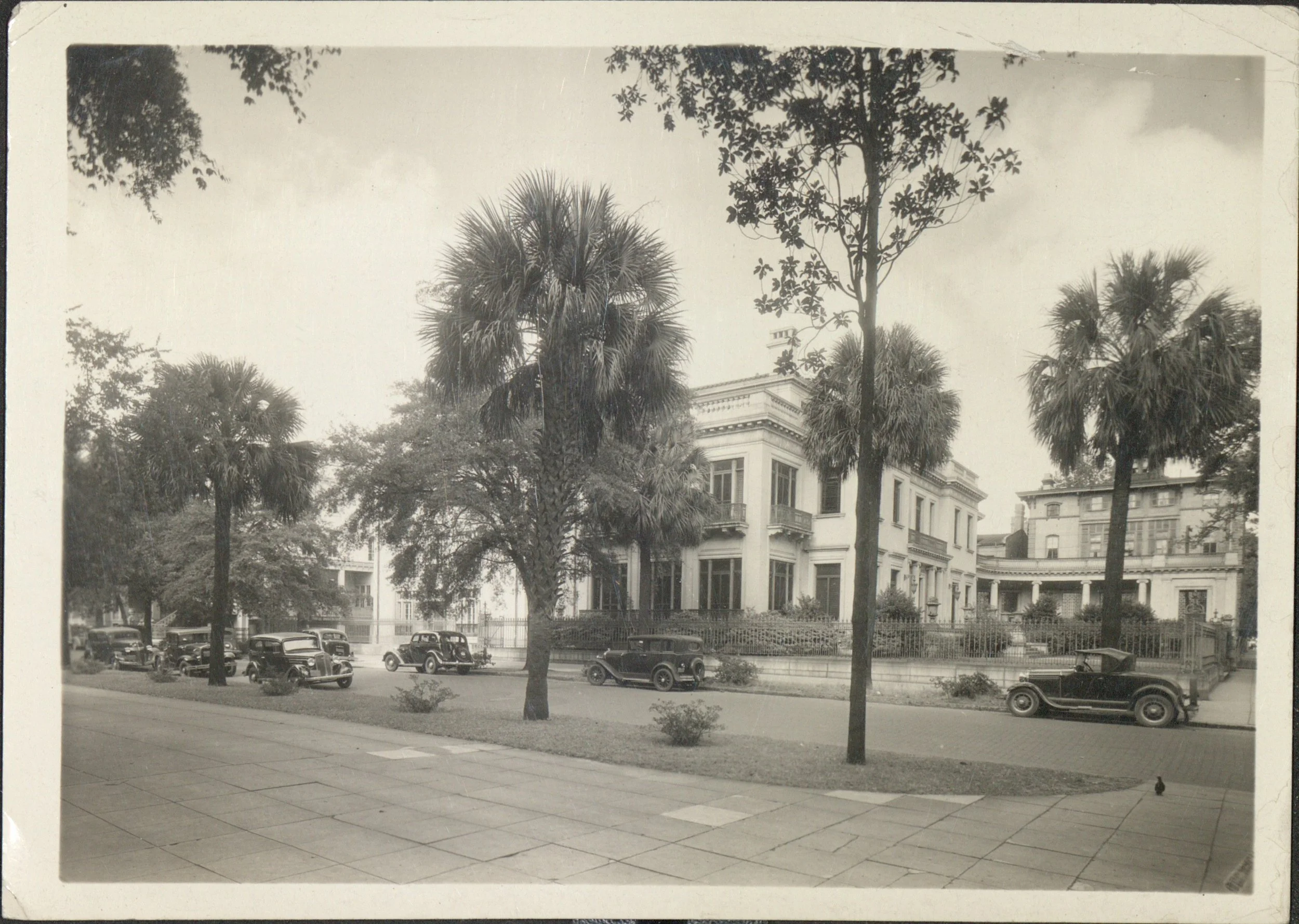
Armstrong Junior College c.1940. Courtesy of the Georgia Historical Society, GHS 1360-PH-03-24-01
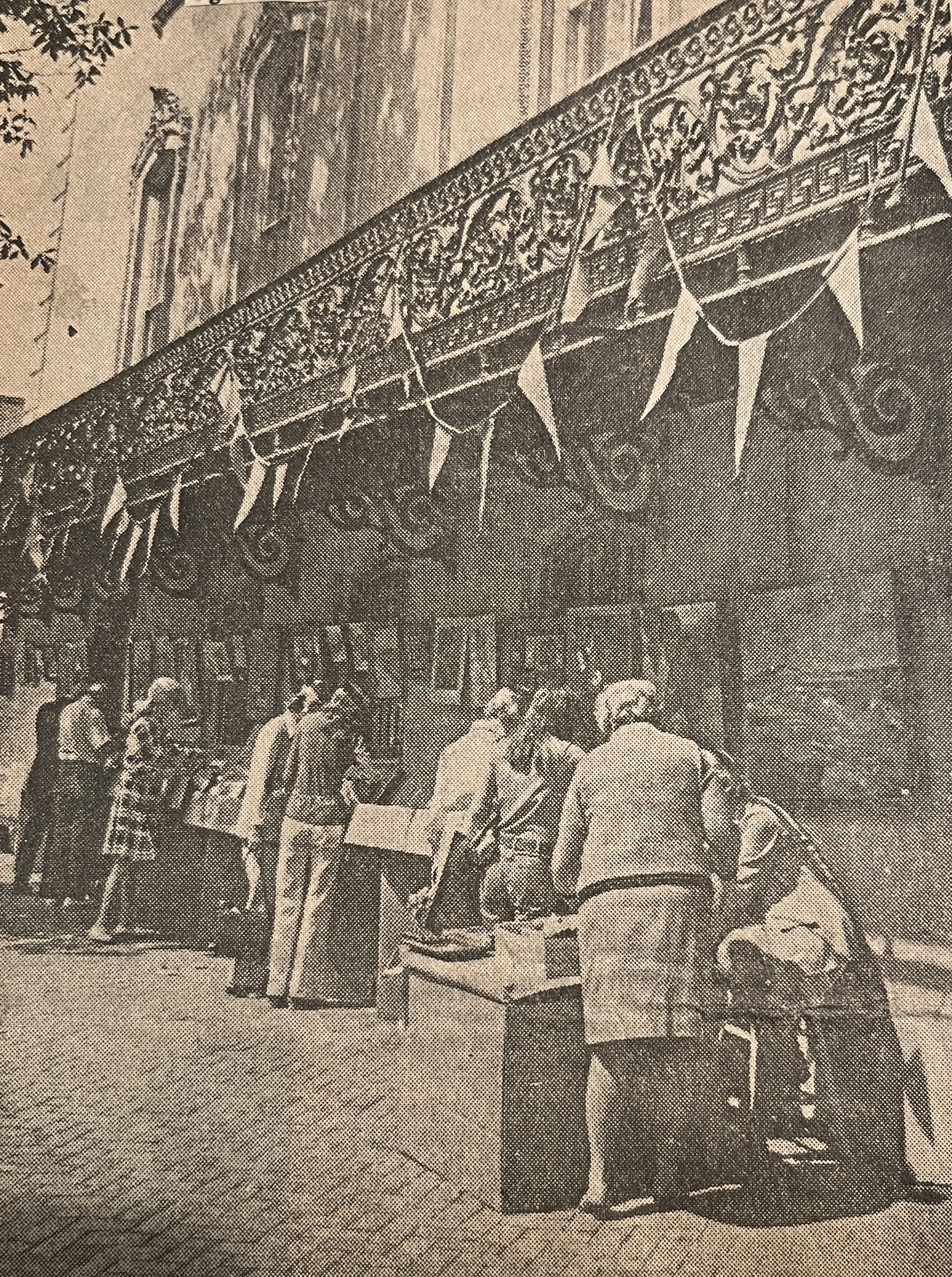
Savannah Arts Festival flea market. Courtesy of Georgia Historical Society, GHS 1849.