Architecture
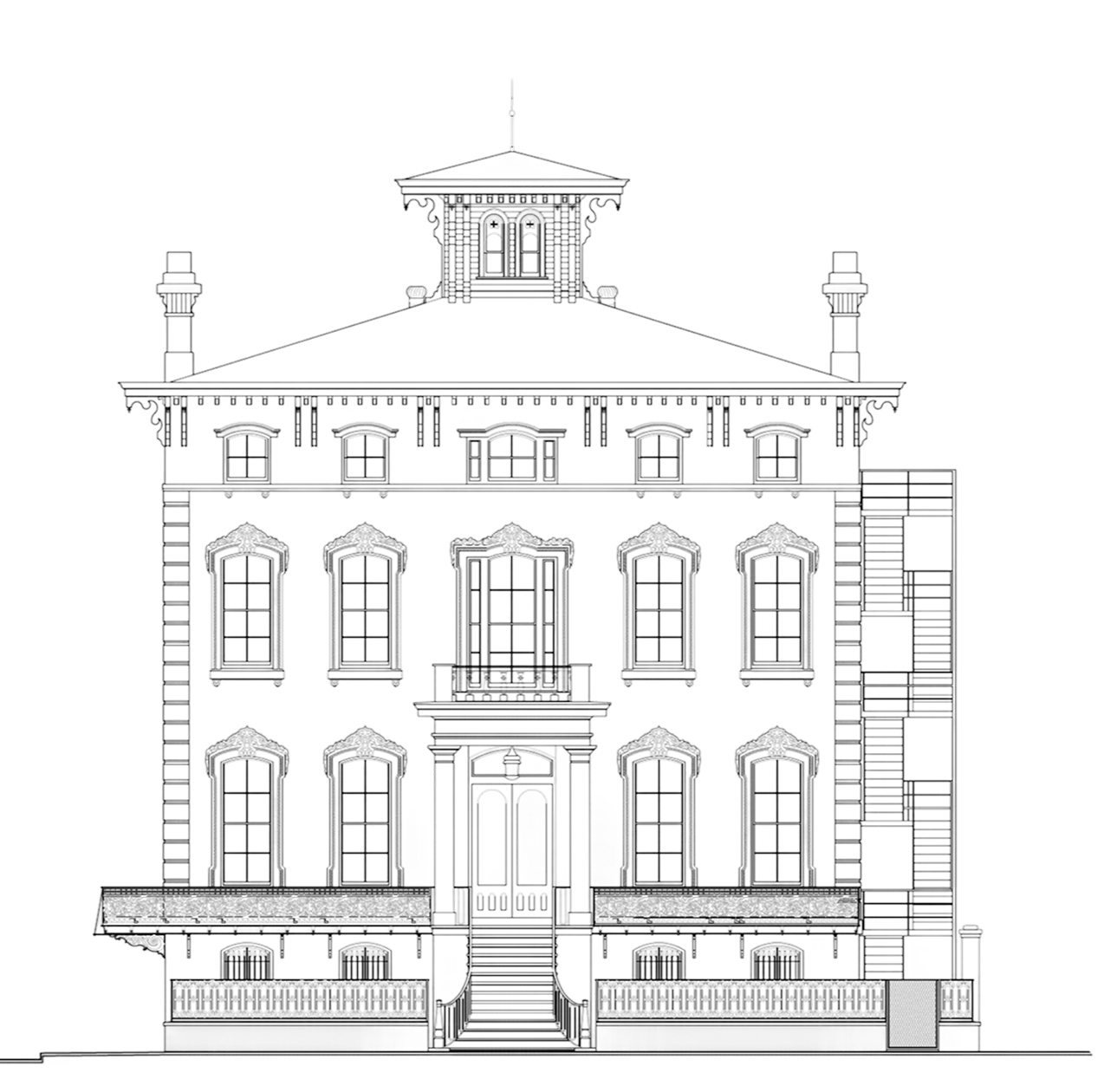
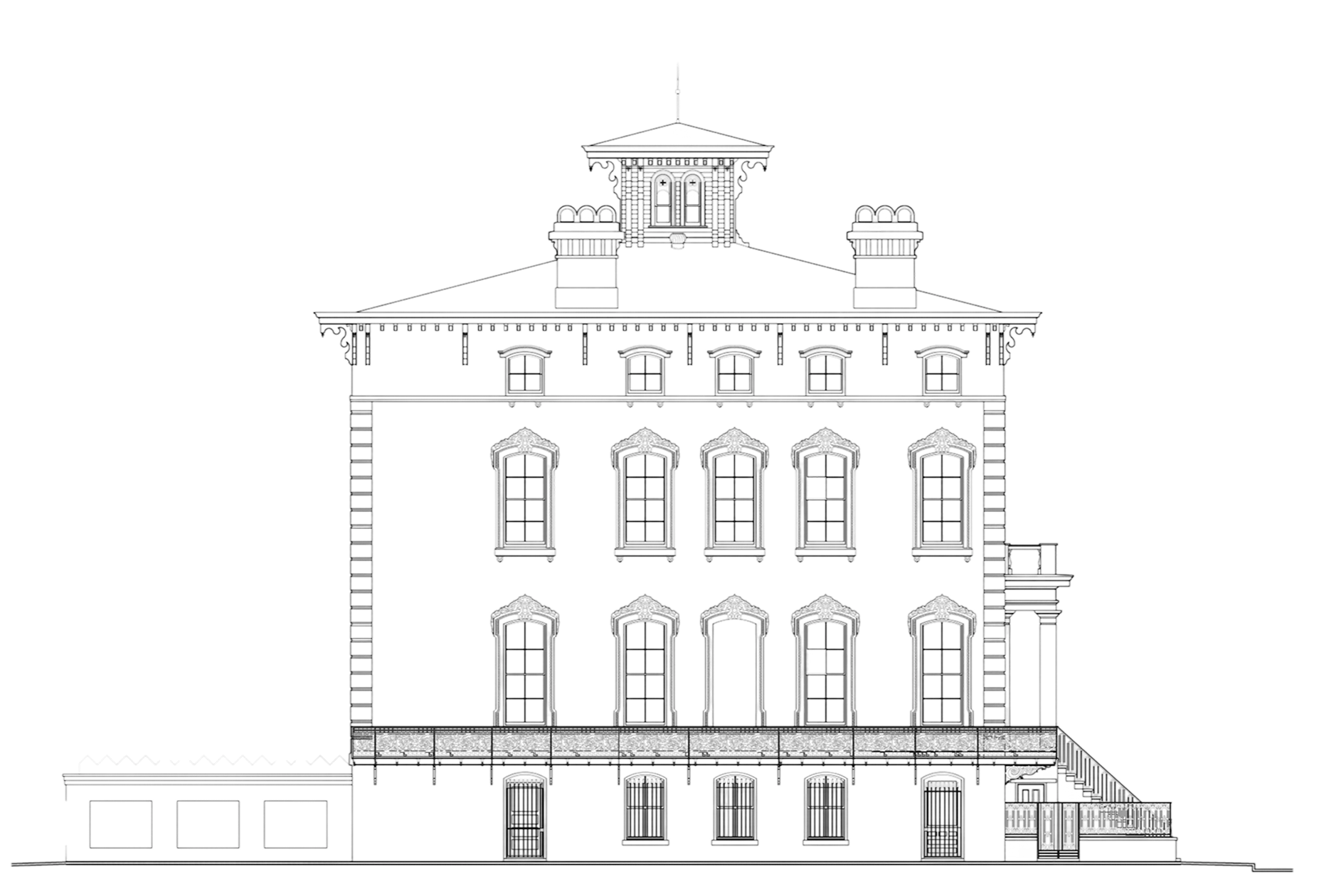
The Noble Hardee House stands as an example of Savannah’s grand architecture of the 1860s, and expresses the wealth, taste, and social standing of the city’s elite. Drawing from neoclassical and antebellum influences, its design carries a quiet, timeless elegance– suggesting a place shaped as much by memory as by design.
See some of the houses’ noteworthy architectural features currently hidden behind scaffolding.
While the architect of the house has not been confirmed through documentation, prior researchers have speculated that it may have been John S. Norris, a New York architect who designed the Mercer House on the adjacent corner of Monterey Square and numerous other important historic structures in Savannah.
Whoever the architect is, the Noble Hardee House is magnificent and the building’s architectural features are a distinct part of Monterey Square.
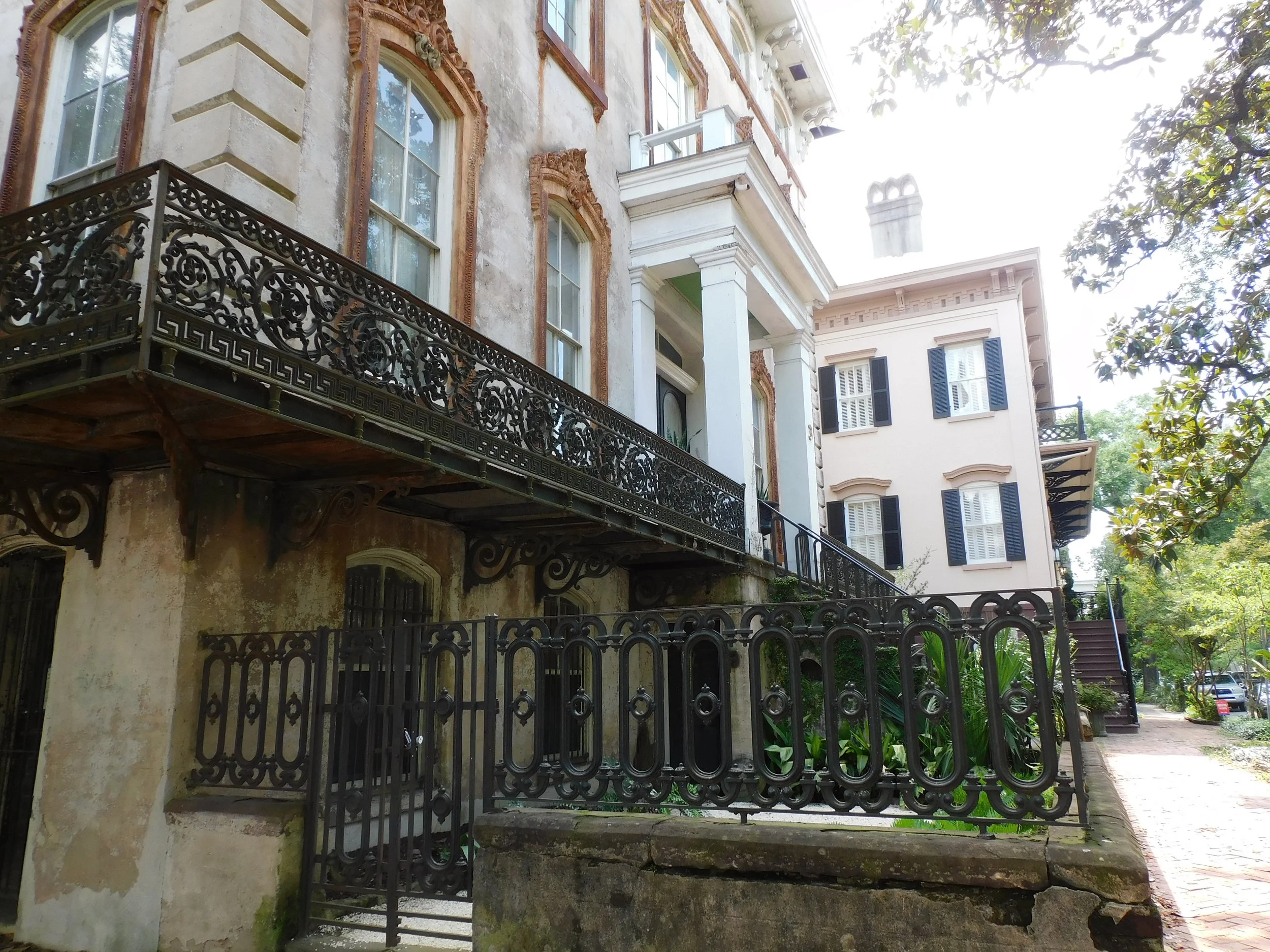
A basement that is partially above ground level, typically with its ceiling at or just above grade and windows visible from the exterior. This design elevates the main floor of the building above ground level, often accessed by a stoop, and allows the ground level to receive natural light and improved ventilation—making it more suitable for living space, storage, or utilities.
Raised basement
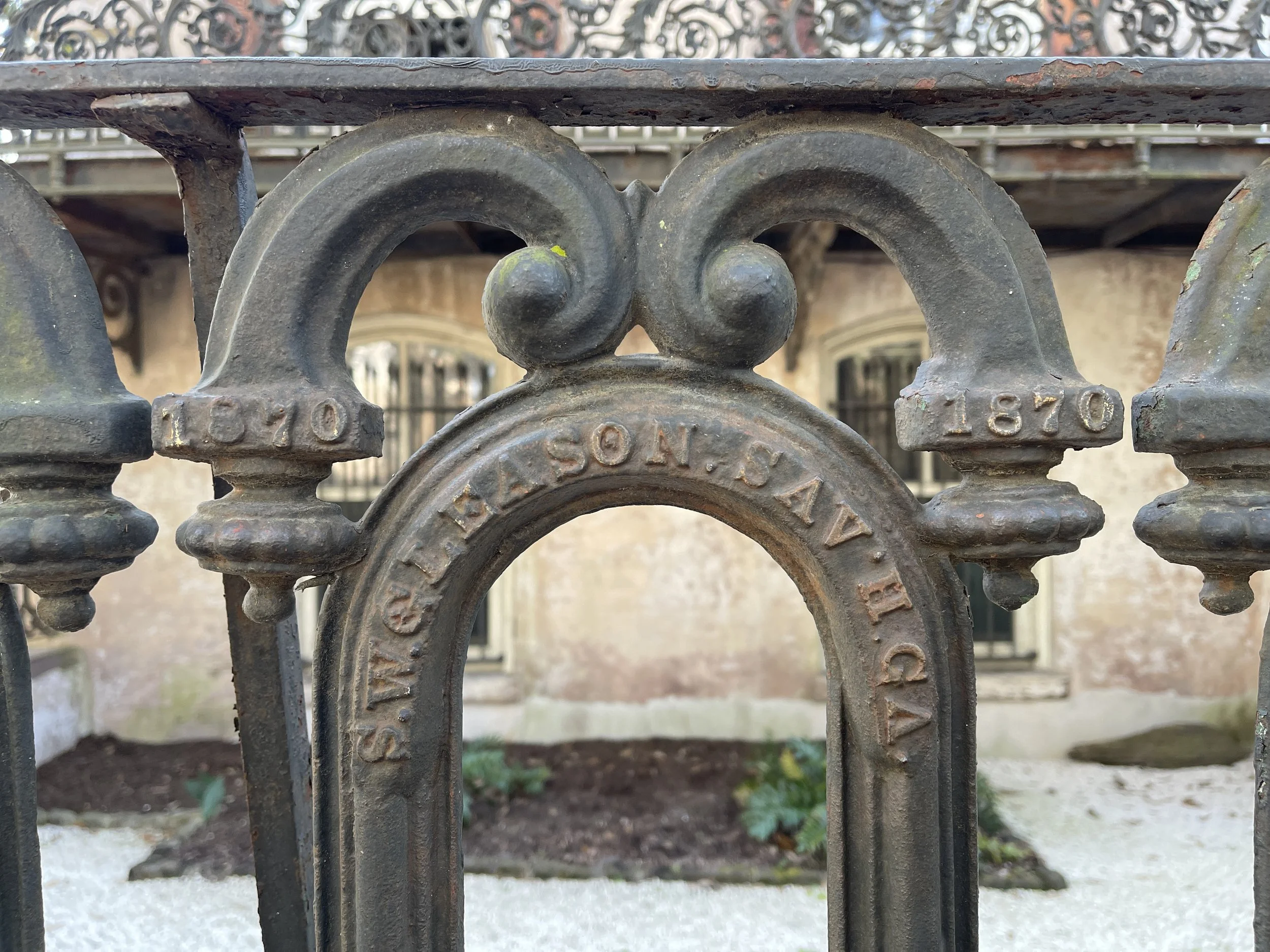
You know what a fence is. But, do you know when the intricate cast iron garden fence at the Noble Hardee House was made? If you look closely you’ll find the date and also the name of the foundry stamped in the cast iron.
Fence
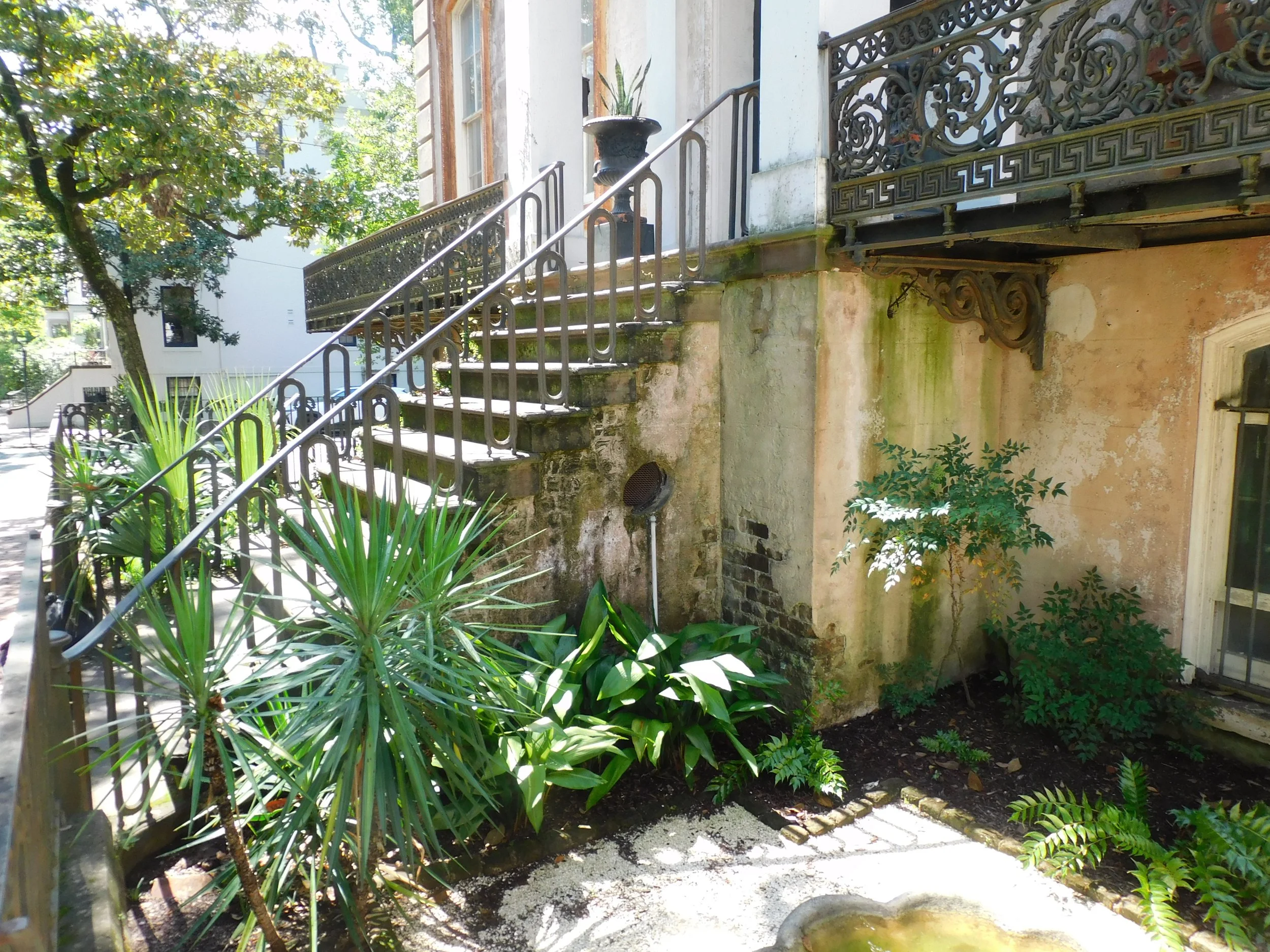
A raised staircase leading from the street to the main entrance of the building. The stoop’s elevated position historically served a practical purpose of keeping residents above the often-unsanitary streets, and later became a prominent architectural element and social space.
Stoop
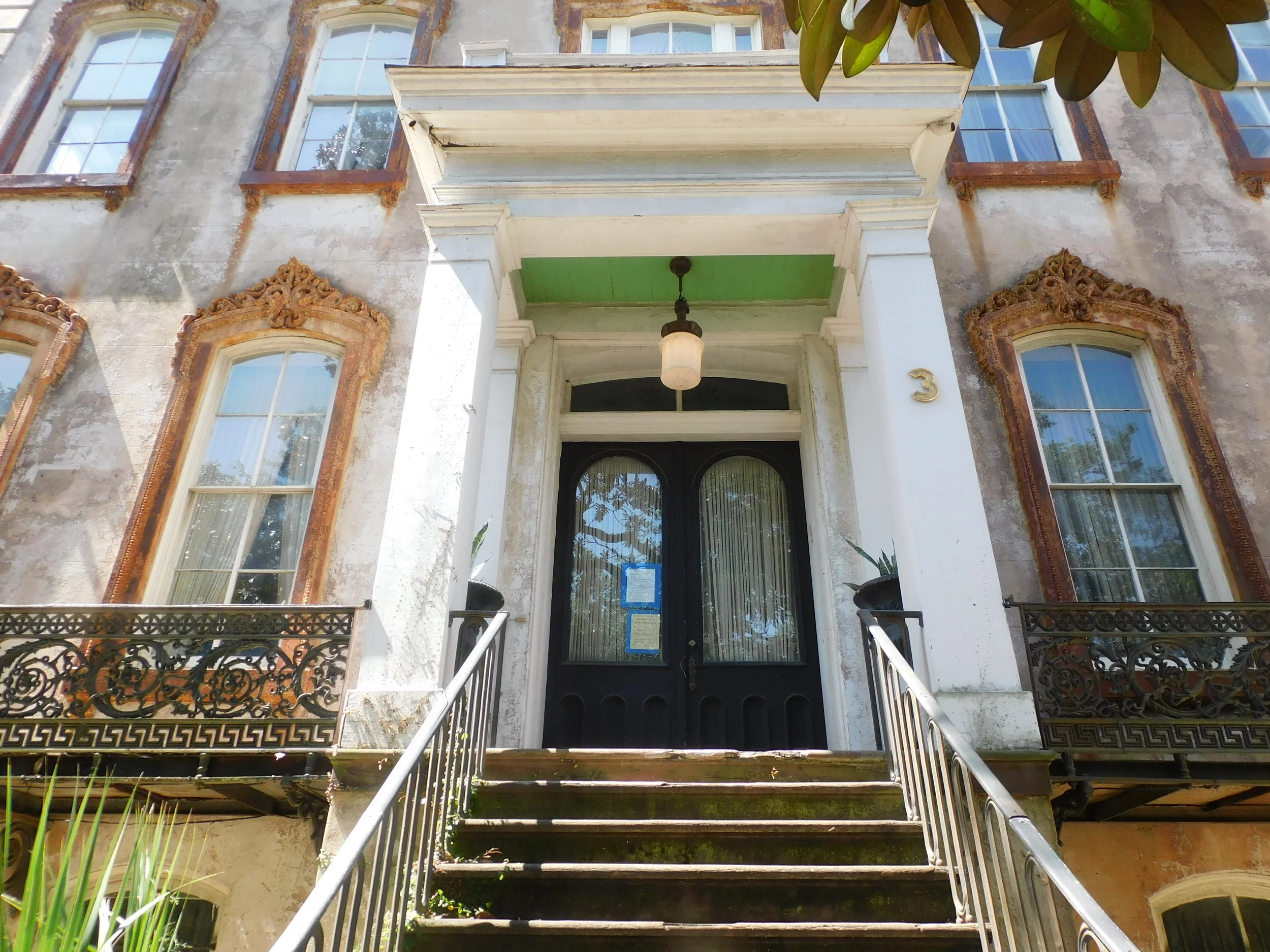
A covered entrance porch that projects from the main façade of a building, typically supported by columns or pillars, and often crowned with a pediment or entablature.
Front portico
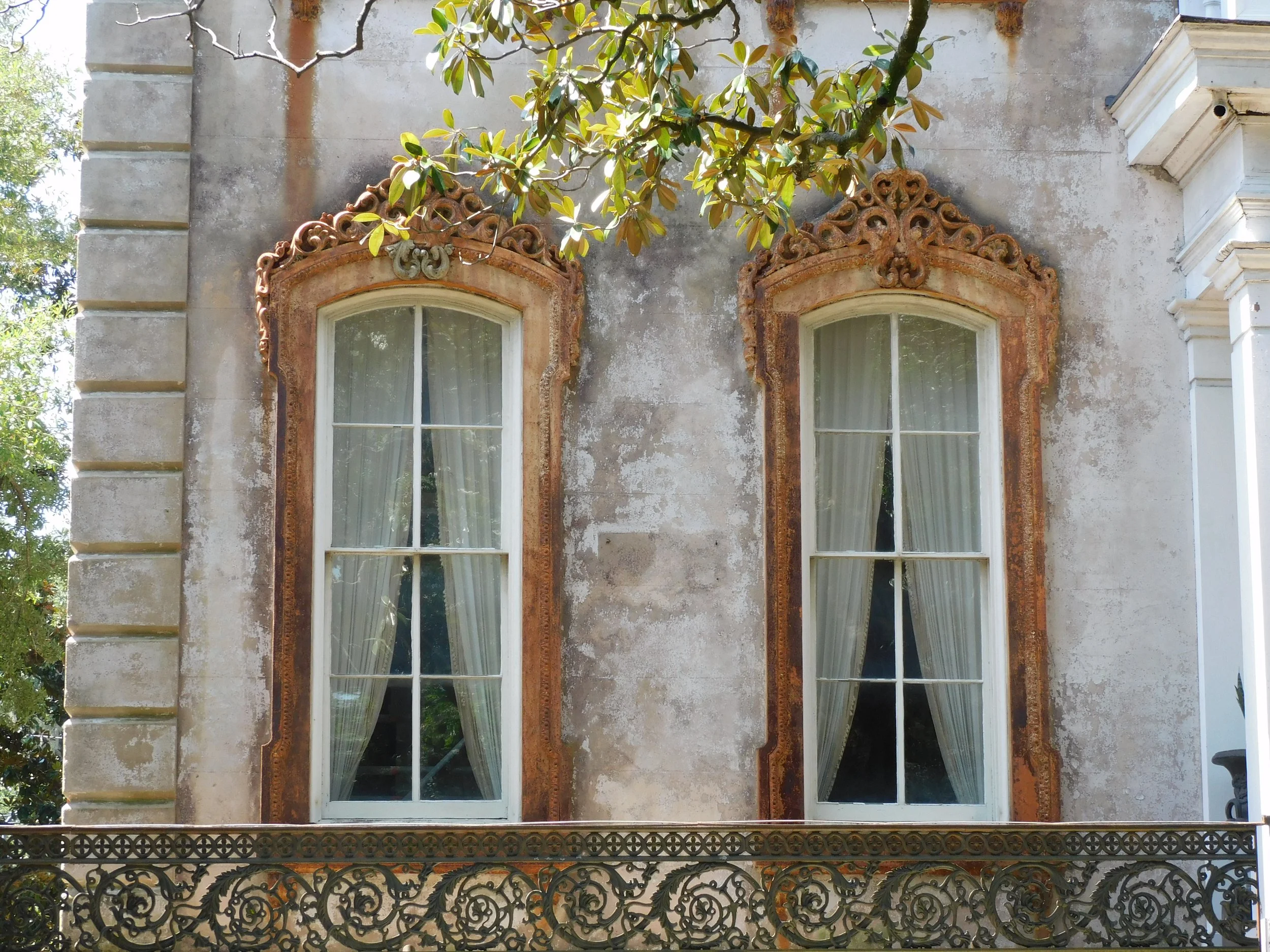
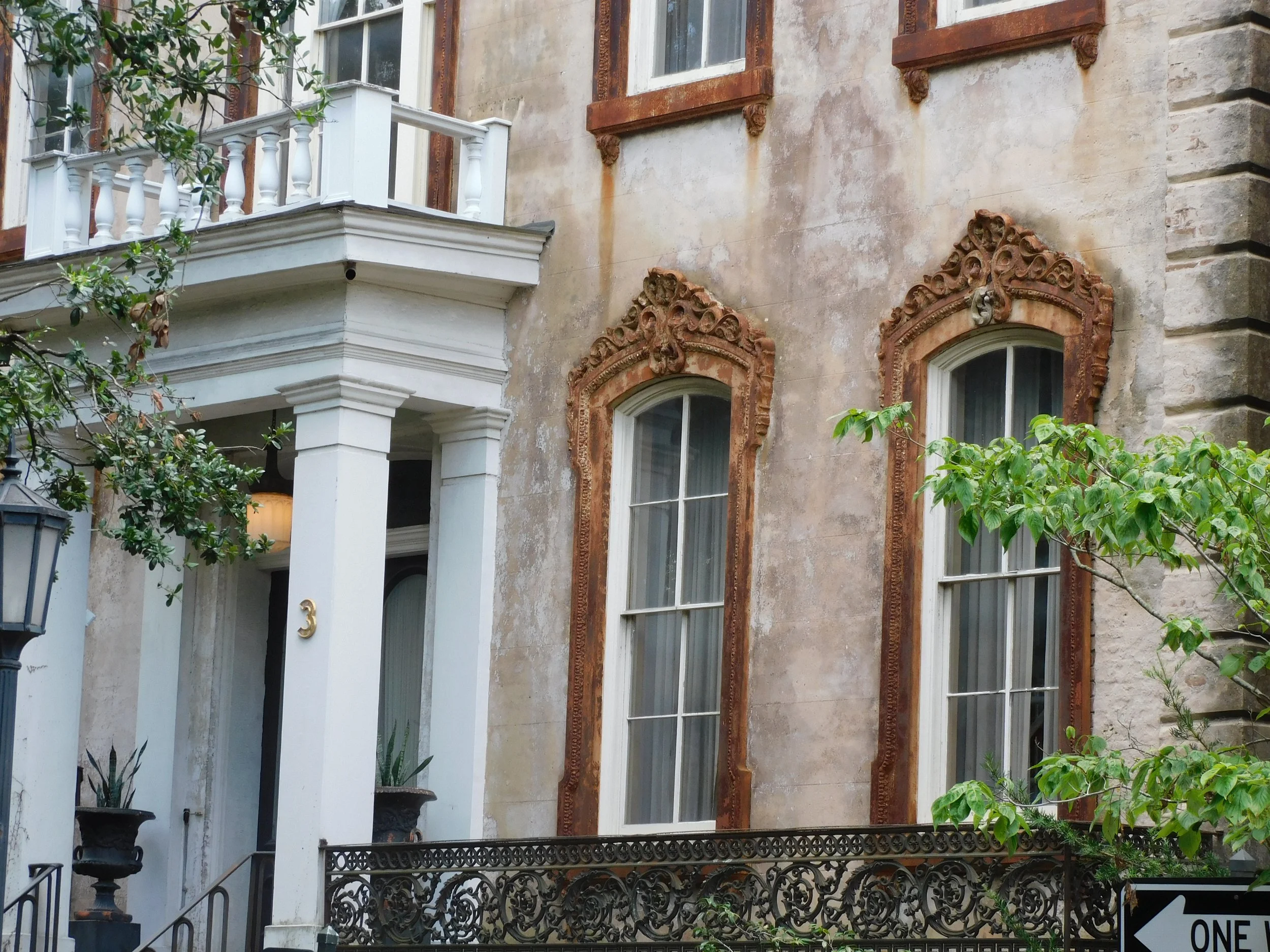
The decorative molding or frame that surrounds a window, also known as window casing or trim. The entire window surround being made of cast iron is uncommon or nonexistent in other buildings in Savannah.
Window surround
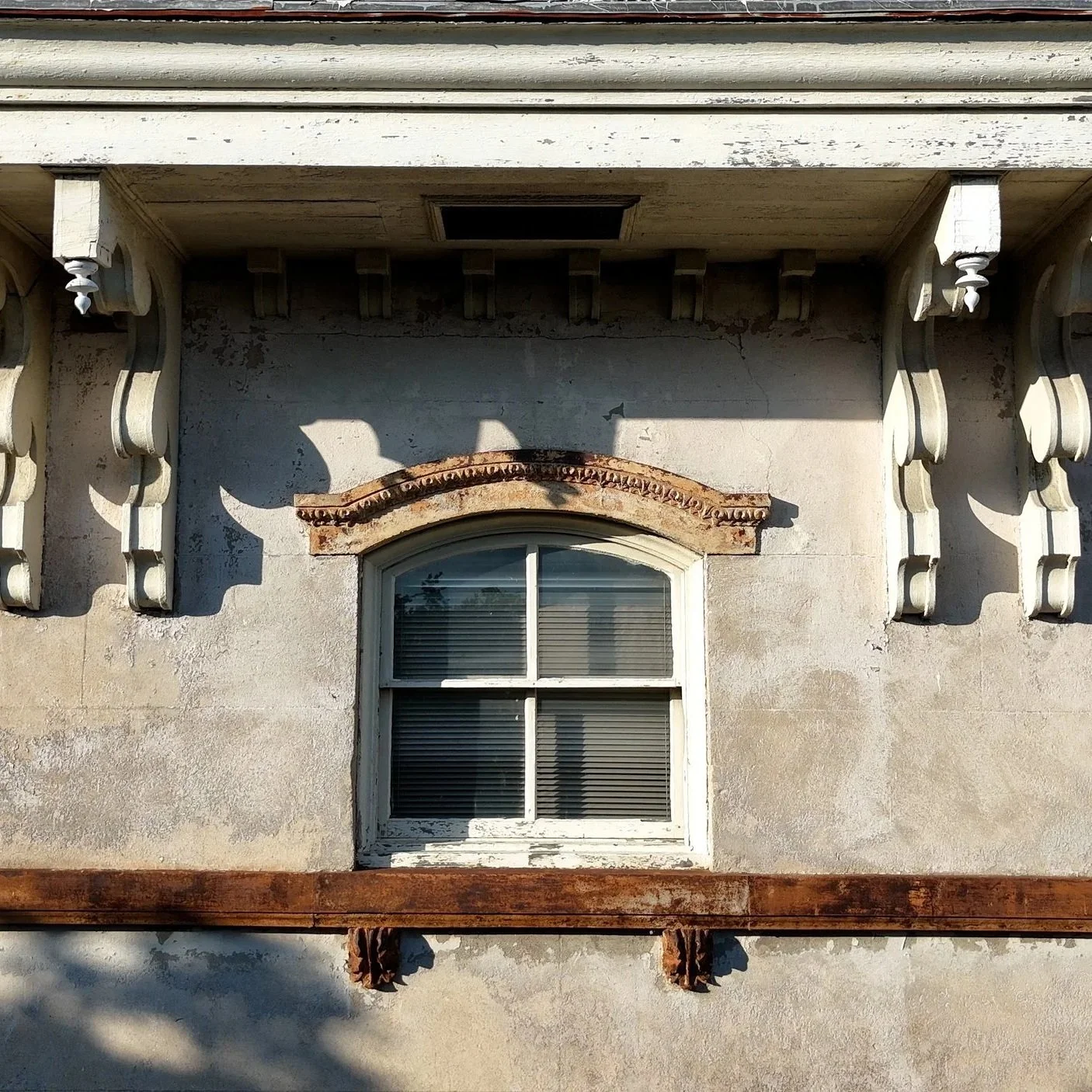
A horizontal structural beam placed above a window opening to support the weight of the wall above it.
Window lintels
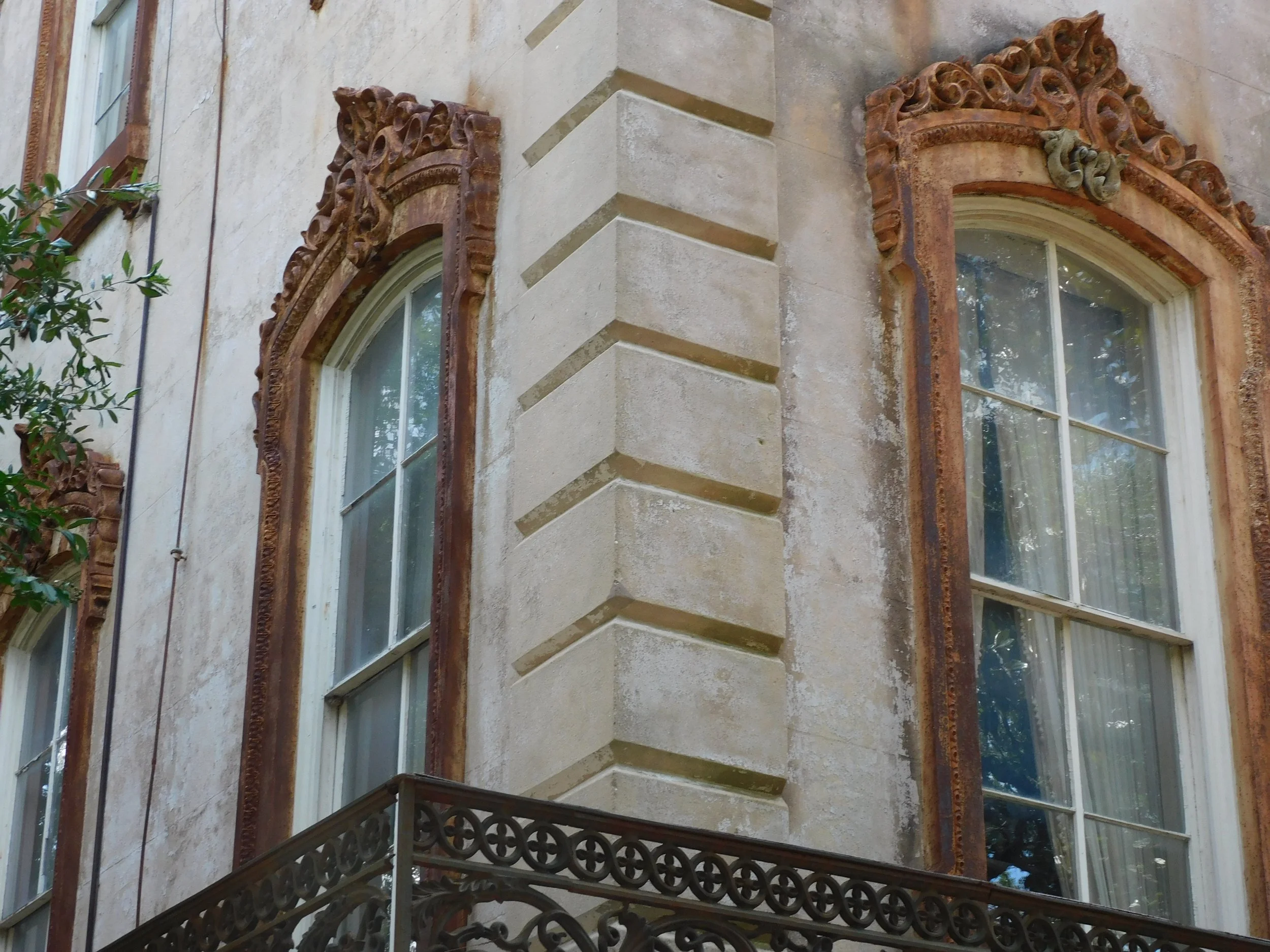
Decorative corner elements at each of the building corners, constructed in an alternating pattern. These are constructed in brick laid in this pattern and then covered in stucco to create the faux masonry units.
Rusticated Quoins
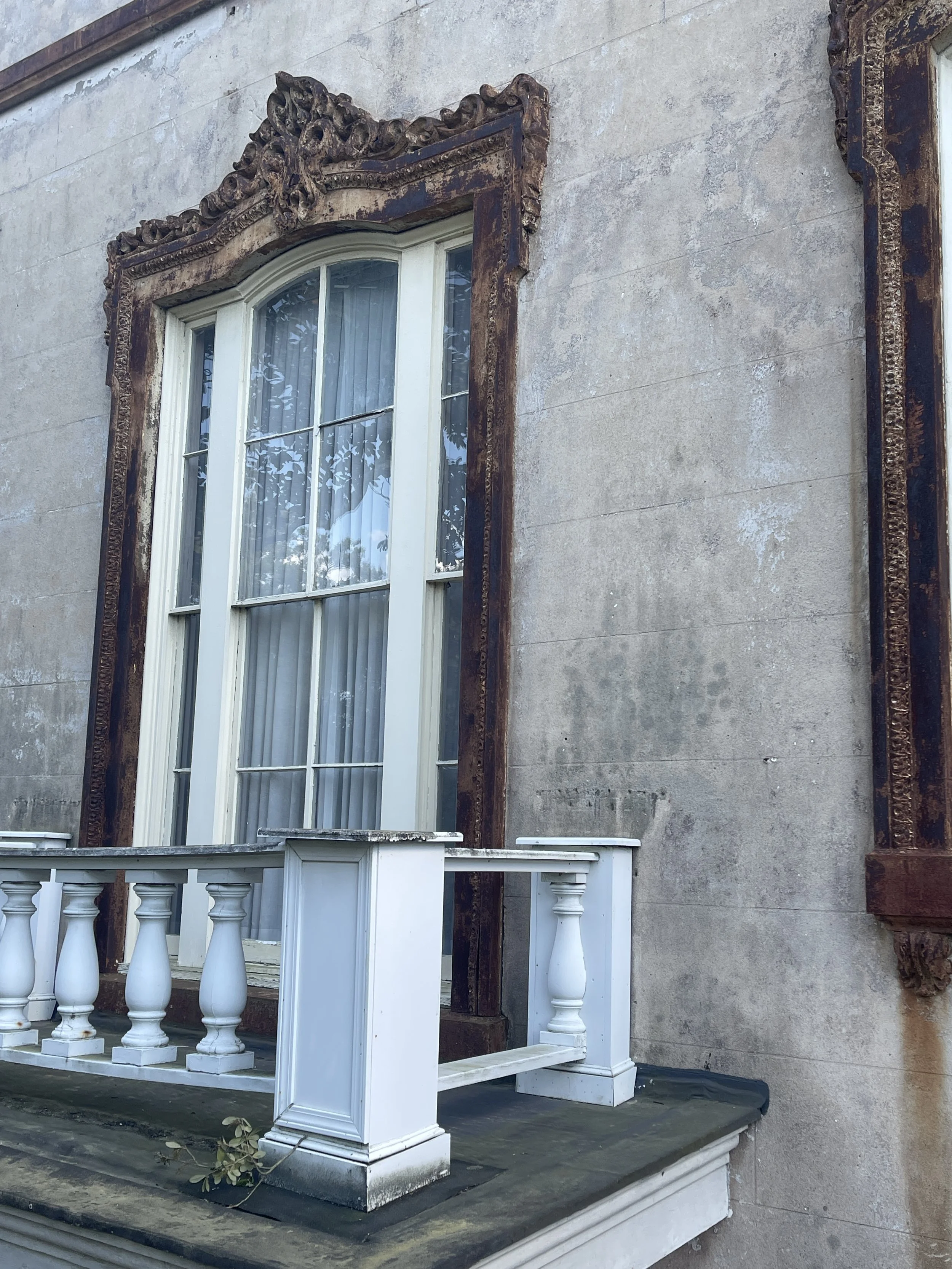
If you look closely in some locations, you can see light horizontal lines. These are evidence of faux joints scored into the stucco facade. These joints are only decorative and are meant to make the stucco facade look like masonry units.
Struck Ashlar Joints
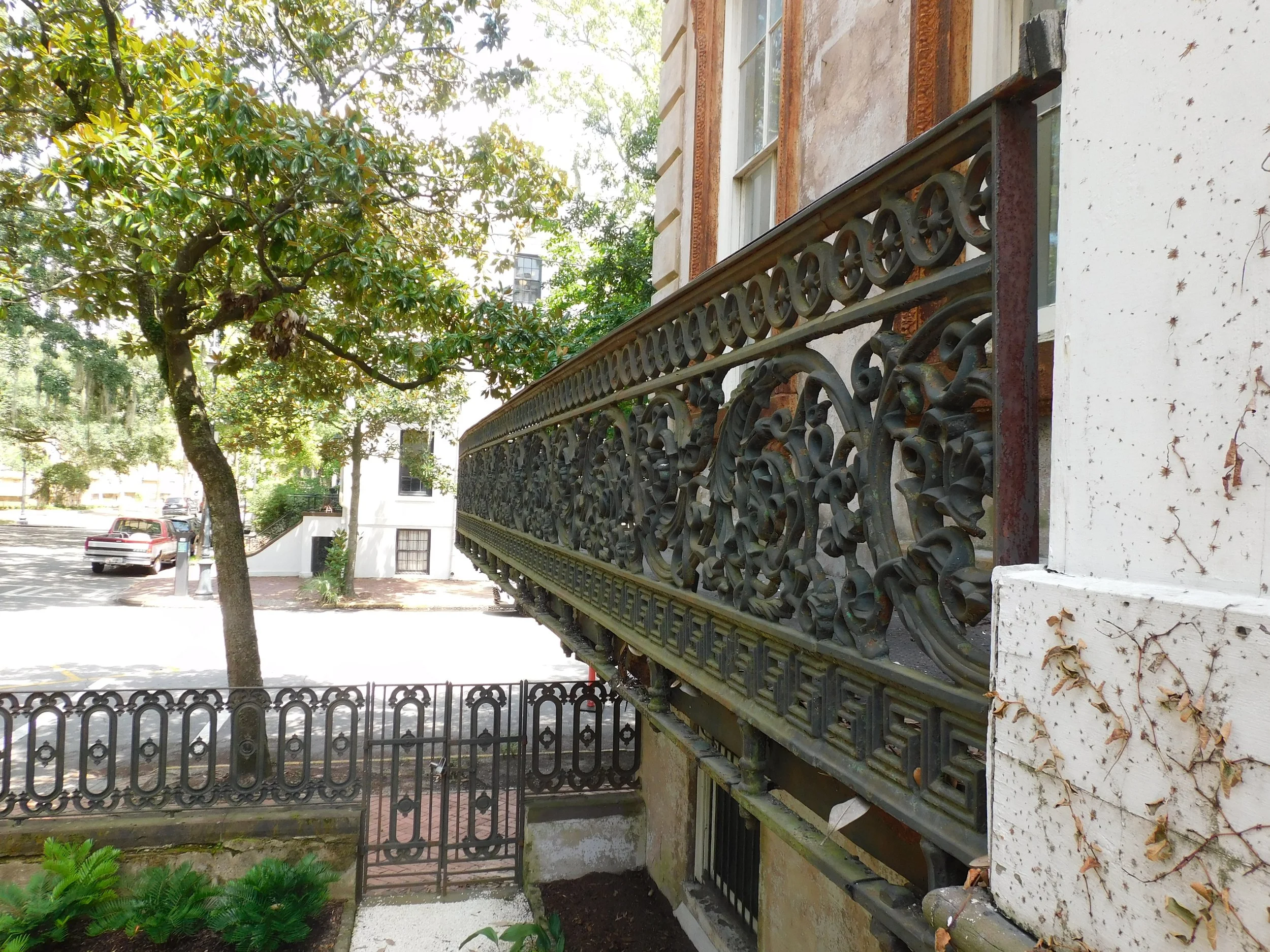
The balcony is one of the most recognizable features of the Noble Hardee House. The cast iron design was produced by Wood & Perot in Philadelphia and was based on one of their most popular designs.
Balcony
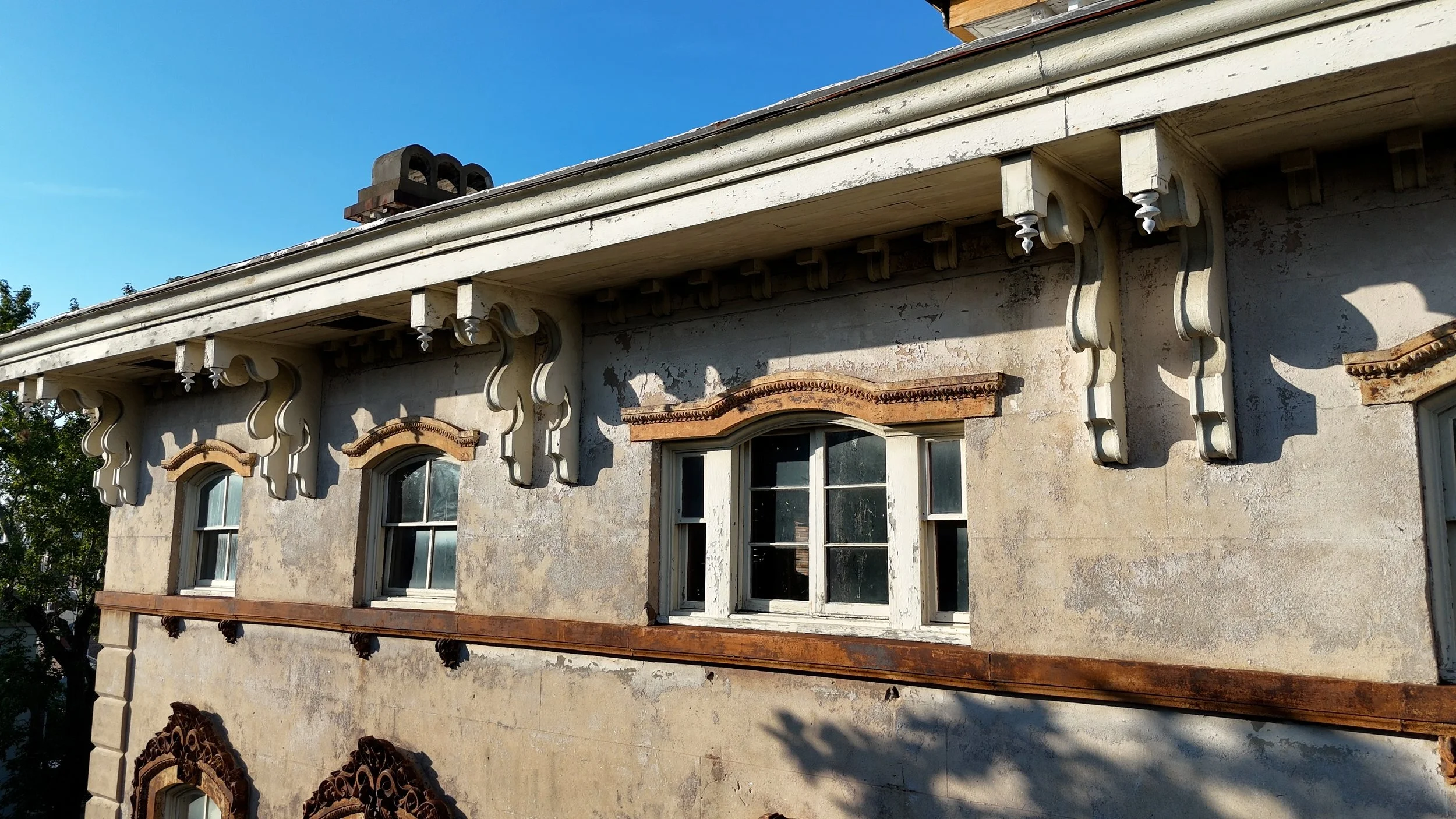
A projecting or flush horizontal band on a building's facade, typically used to mark floor levels or separate sections of the building. The Noble Hardee House has both cast iron and sandstone belt courses.
Belt course
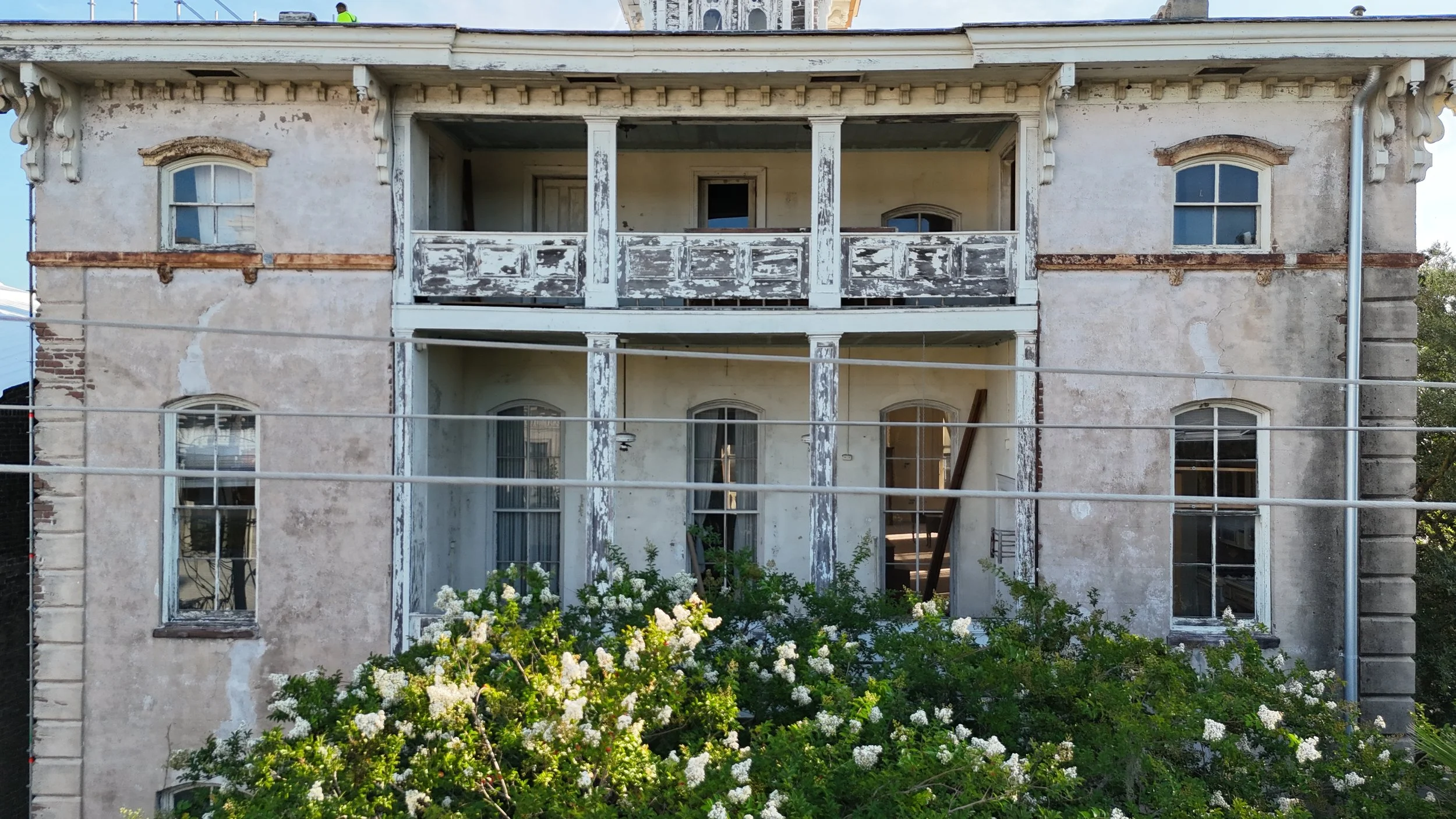
The south facade of the building has a wooden porch structure, also commonly referred to as a gallery in Savannah’s architecture, spanning all floors of the building with access points from the interior of the building on every floor.
Gallery
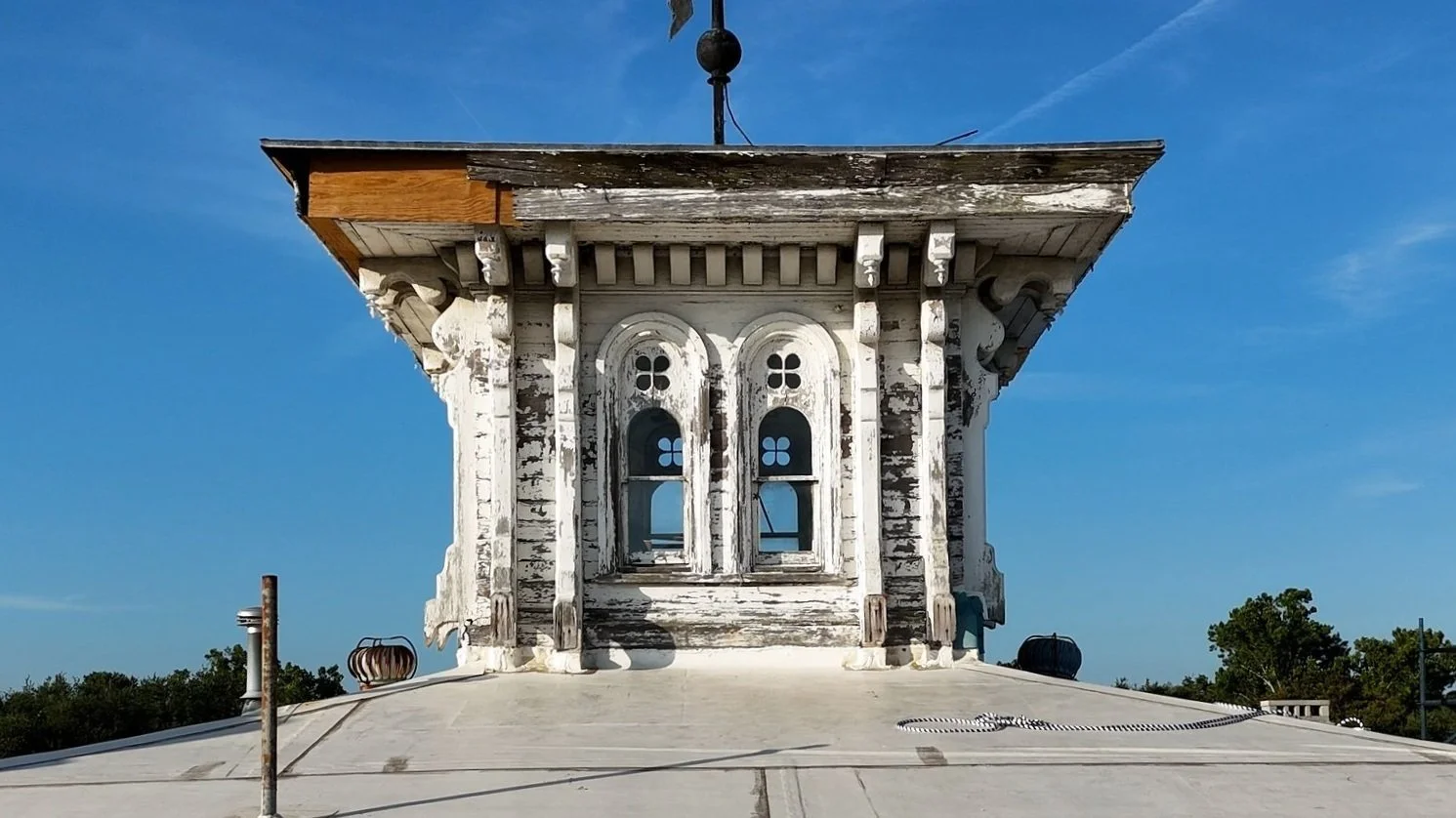
The small structure that sits atop a building's roof, and serves as both a decorative element and means to provide natural light and ventilation. Notice the wood carvings similar to the roof brackets.
Cupola
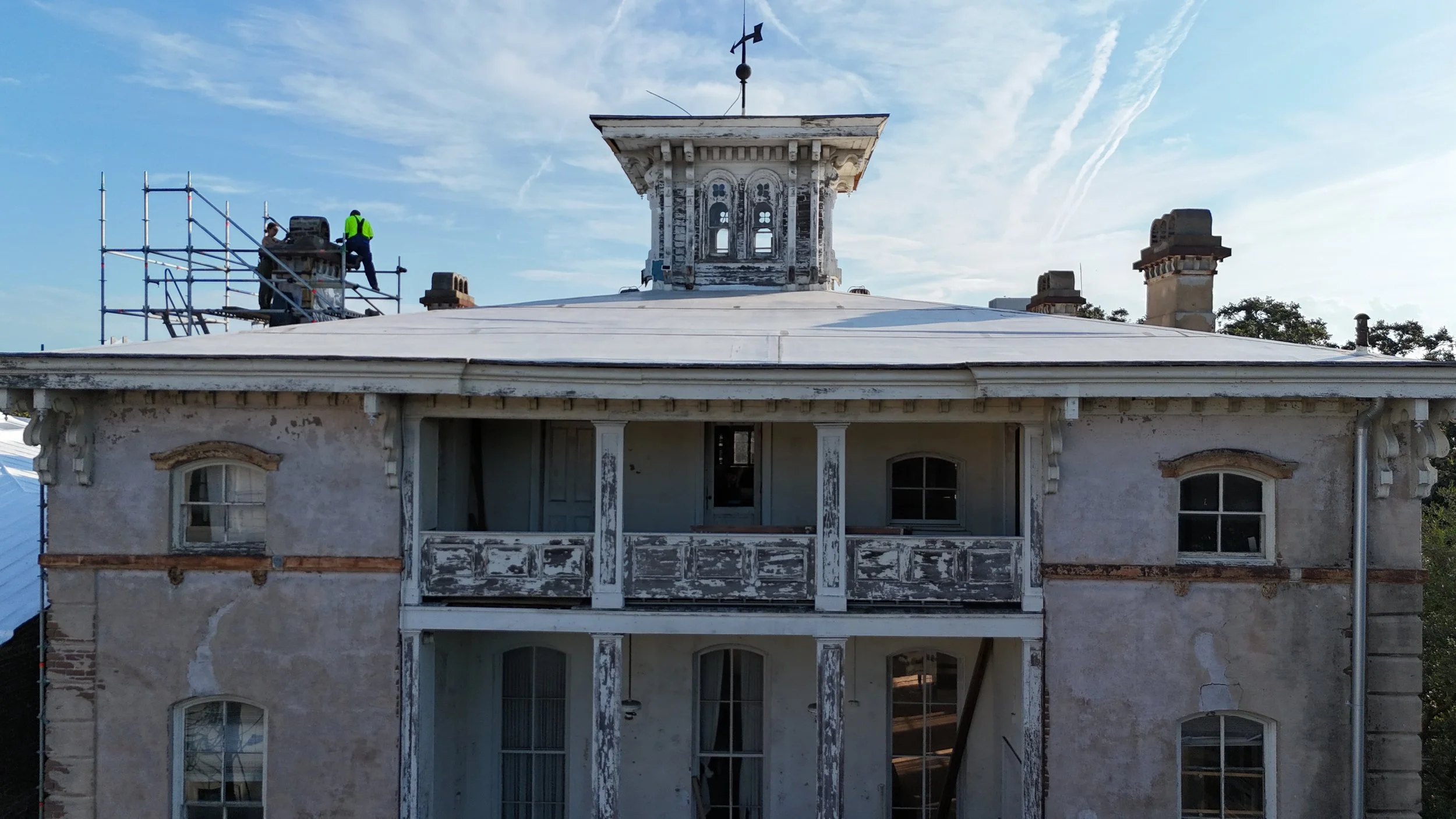
A hip or hipped roof is a roof that slopes downward from all sides of a building, creating a gentle pyramid-like shape.
Hipped roof
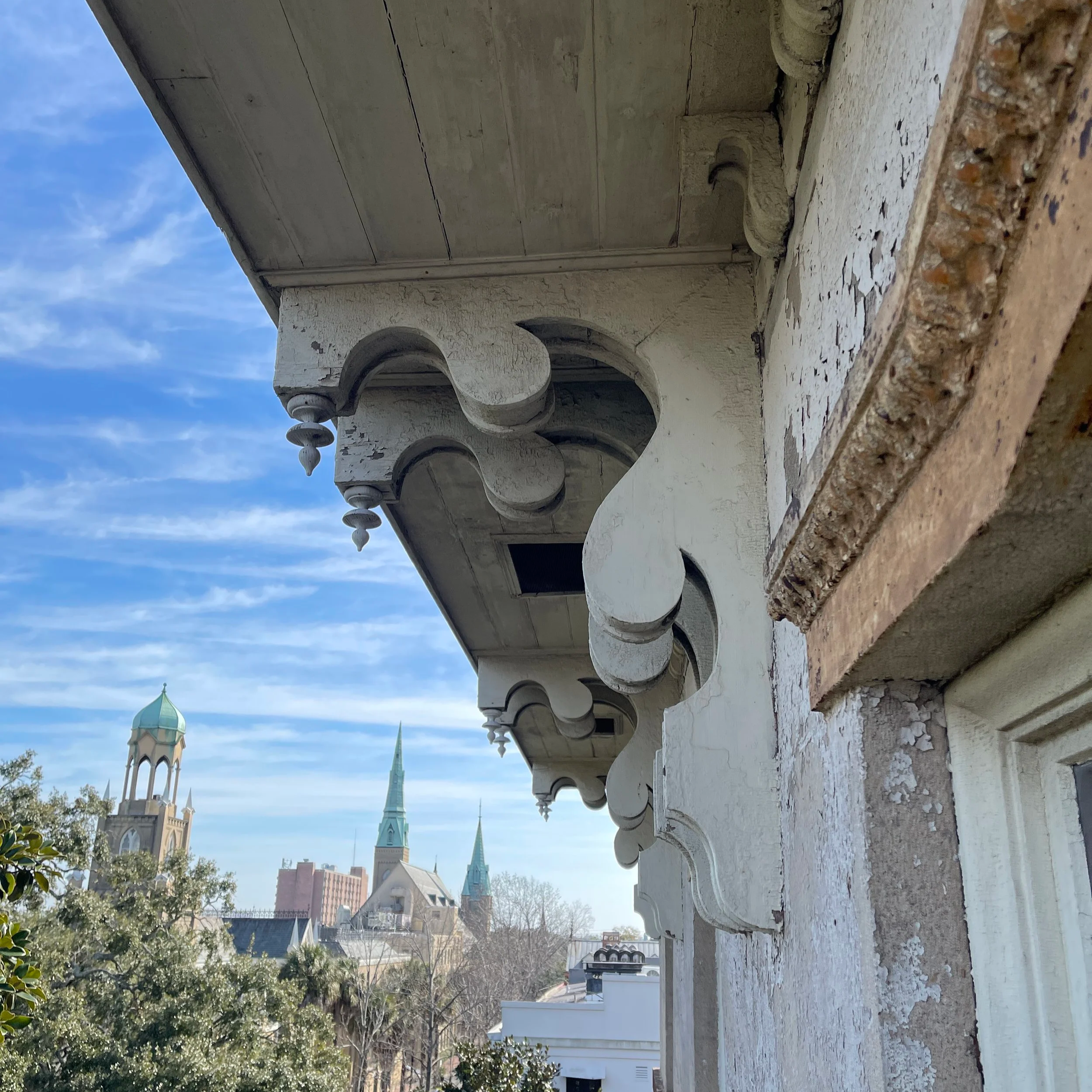
The structural or decorative architectural elements that project from a wall, and often carry weight. Similar brackets are used on the cornice and the cupola. There are also iron brackets supporting the balcony.
Brackets